ACL, Meniscus and Ligament Injuries in Athletes
Latest Research, Causes, Treatment & Prevention (2026 Guide)
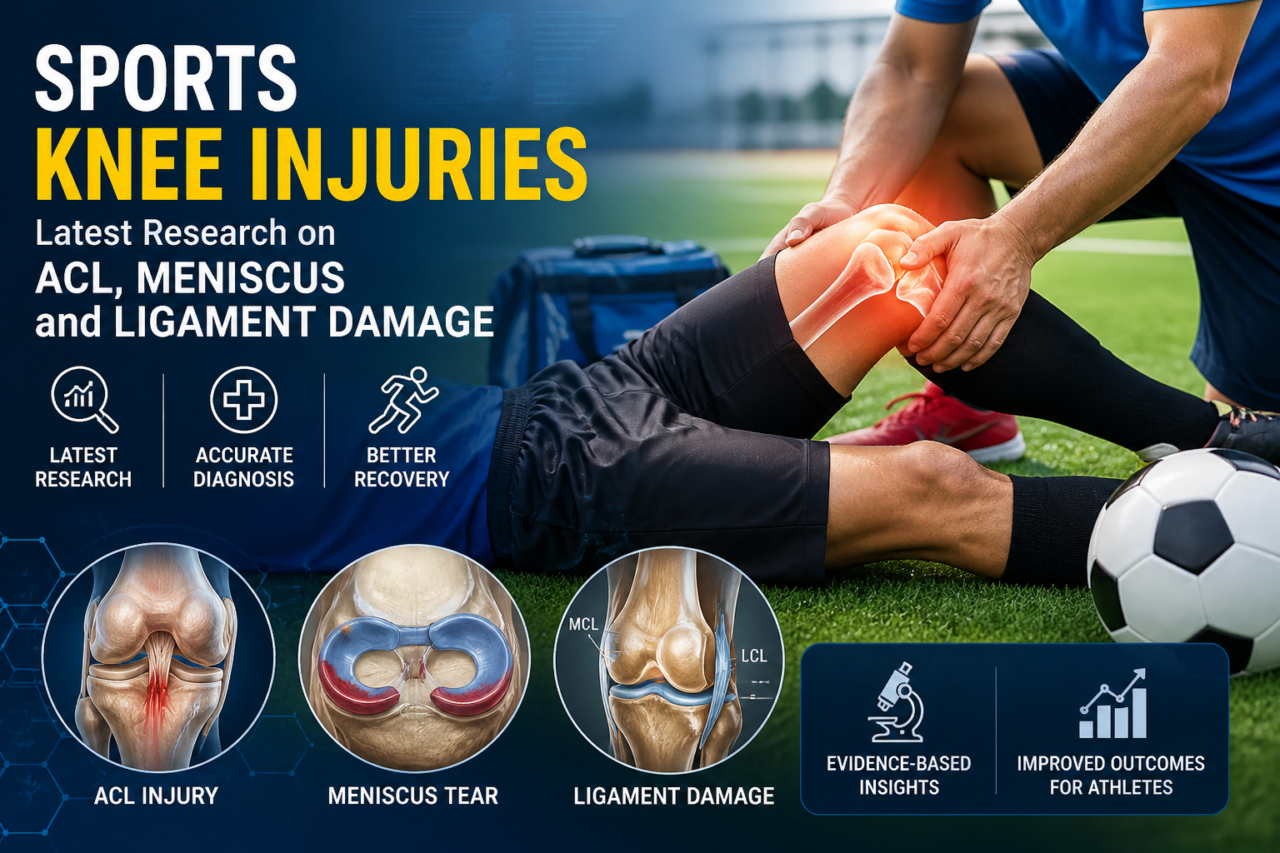
Sports injuries involving the knee are among the most common injuries seen in athletes worldwide. The knee joint relies on multiple ligaments and cartilage structures to maintain stability during high-impact movements such as running, jumping, pivoting, and sudden direction changes. Injuries to the Anterior Cruciate Ligament (ACL), meniscus, and other knee ligaments can severely affect an athlete’s performance and long-term joint health.
Recent orthopedic and sports medicine research highlights that early diagnosis, advanced imaging, minimally invasive surgery, and modern rehabilitation protocols have significantly improved recovery outcomes for athletes suffering from these injuries.
Understanding Knee Injuries in Athletes
The knee joint consists of bones, ligaments, tendons, and cartilage structures that allow smooth movement and stability. Key components include:
Major Knee Ligaments
- ACL (Anterior Cruciate Ligament) – prevents the tibia from sliding forward.
- PCL (Posterior Cruciate Ligament) – prevents backward movement of the tibia.
- MCL (Medial Collateral Ligament) – stabilizes the inner knee.
- LCL (Lateral Collateral Ligament) – stabilizes the outer knee.
Knee Cartilage
- Meniscus (Medial & Lateral) – C-shaped cartilage acting as a shock absorber between bones.
When athletes experience sudden twisting movements, high-speed collisions, or improper landings, these structures can become damaged.
Latest Research and Statistics on Knee Injuries in Athletes
Recent sports medicine research highlights the high prevalence of knee injuries in athletic populations.
Global Injury Statistics
- ACL injuries occur in approximately 68 per 100,000 people annually, with athletes being the most affected group.
- Female athletes are 2–6 times more likely to suffer ACL injuries compared to male athletes.
- Soccer, basketball, skiing, and football show the highest incidence of ACL tears.
Research on Combined Knee Injuries
A clinical study analyzing 600 athletes with ACL tears found:
- 67% of athletes also had meniscal or cartilage injuries.
- 57% had meniscus damage alongside ACL injury.
- 18% experienced both meniscal and cartilage injuries simultaneously.
This highlights that knee injuries often occur in combination rather than isolation.
Sports Injury Risk
Research examining sports participation shows:
- Soccer players experienced ACL injuries at a rate of 0.523 per 1000 hours of play.
- Meniscus injuries occurred at 0.448 per 1000 hours of play.
These statistics show why knee injuries remain one of the leading causes of time away from competitive sports.
1. ACL Injuries in Athletes
What is an ACL Injury?
The Anterior Cruciate Ligament (ACL) is one of the most important stabilizing ligaments in the knee. It prevents excessive forward movement of the tibia and stabilizes rotational movement.
Common Causes
ACL tears often occur during:
- Sudden direction changes (pivoting)
- Jumping and landing incorrectly
- Rapid deceleration
- Direct collision in contact sports
Common Sports Associated with ACL Injuries
- Football / Soccer
- Basketball
- Volleyball
- Skiing
- Rugby
Symptoms
Athletes often experience:
- A “popping” sound in the knee
- Immediate swelling
- Severe instability
- Difficulty bearing weight
- Limited range of motion
Treatment Options
Non-surgical treatment
- Physiotherapy
- Knee braces
- Strengthening exercises
Surgical treatment
- ACL reconstruction surgery
- Arthroscopic ligament reconstruction
- Graft procedures using hamstring or patellar tendon
2. Meniscus Injuries in Athletes
What is the Meniscus?
The meniscus is a cartilage pad located between the thigh bone (femur) and shin bone (tibia). It absorbs shock and helps distribute body weight across the knee joint.
Types of Meniscus Tears
- Radial tear
- Bucket handle tear
- Horizontal tear
- Complex tear
- Degenerative tear
Causes in Athletes
Meniscus injuries often occur due to:
- Twisting while the foot is planted
- Sudden pivoting movements
- Knee hyper-flexion
- ACL injuries occurring simultaneously
Because meniscus injuries frequently accompany ligament damage, doctors often diagnose them during MRI scans or arthroscopic surgery.
Symptoms
- Knee pain
- Locking or catching sensation
- Swelling
- Reduced knee movement
- Difficulty straightening the knee
Treatment Options
Modern treatment approaches include:
- Rest, Ice, Compression, Elevation (RICE)
- Physical therapy
- Arthroscopic meniscus repair
- Partial meniscectomy
- Meniscus transplantation in severe cases
3. Other Knee Ligament Injuries
Apart from ACL injuries, athletes may also experience damage to other knee ligaments.
PCL Injuries
The Posterior Cruciate Ligament (PCL) prevents backward movement of the tibia. These injuries usually occur due to:
- Direct impact to the knee
- Car accidents
- Contact sports collisions
MCL Injuries
The Medial Collateral Ligament (MCL) is injured when the knee is forced inward.
Common in:
- Football
- Rugby
- Hockey
LCL Injuries
The Lateral Collateral Ligament (LCL) stabilizes the outer knee and is usually injured due to trauma to the inside of the knee.
Diagnosis of Knee Injuries
Early diagnosis is crucial for preventing long-term joint damage.
Diagnostic Methods
Orthopedic specialists typically use:
Clinical Examination
- Lachman Test
- Pivot Shift Test
- McMurray Test
Imaging Techniques
- MRI scan (gold standard)
- X-ray for fractures
- Ultrasound in some cases
- Arthroscopy for direct visualization
Advanced AI-assisted MRI analysis is also being developed to help grade ACL injury severity more accurately.
Modern Treatment Techniques (2026)
Orthopedic sports medicine has advanced significantly in recent years.
Latest Surgical Innovations
- Arthroscopic ligament reconstruction
- All-inside ACL repair techniques
- Meniscus preservation surgery
- Biological ligament grafts
- Robotic-assisted orthopedic surgery
These techniques aim to:
- Reduce surgical trauma
- Improve stability
- Accelerate recovery
- Preserve natural joint structures
Prevention Strategies for Athletes
Preventing knee injuries is a major focus in sports medicine.
Injury Prevention Methods
Athletes can reduce injury risk by:
- Strengthening quadriceps and hamstrings
- Improving landing mechanics
- Using neuromuscular training programs
- Maintaining flexibility
- Wearing appropriate sports footwear
Some neuromuscular training programs have shown injury reduction rates of nearly 40% in high-risk athletes.
Long-Term Risks if Untreated
Ignoring knee injuries can lead to serious complications.
Possible long-term effects include:
- Chronic knee instability
- Repeated ligament tears
- Early osteoarthritis
- Cartilage degeneration
- Reduced athletic performance
This is why orthopedic specialists strongly recommend early diagnosis and appropriate treatment.
Conclusion
ACL, meniscus, and ligament injuries are among the most significant orthopedic challenges faced by athletes today. Advances in sports medicine, imaging technologies, and minimally invasive surgical techniques have dramatically improved treatment outcomes.
However, the key to successful recovery remains early diagnosis, proper treatment, and structured rehabilitation. Athletes who receive timely medical care can often return to their sport safely and regain full knee function.
With continued research and better injury prevention programs, sports medicine experts hope to reduce the incidence of these injuries and help athletes maintain long, healthy careers.