

The Posterior Cruciate Ligament (PCL) is one of the four major ligaments of the knee joint. It connects the thigh bone (femur) to the shin bone (tibia) and is located behind the Anterior Cruciate Ligament (ACL) inside the knee.
The PCL plays a crucial role in stabilizing the knee joint, preventing the tibia from moving too far backward relative to the femur. It is stronger and thicker than the ACL, making PCL injuries less common but still serious.
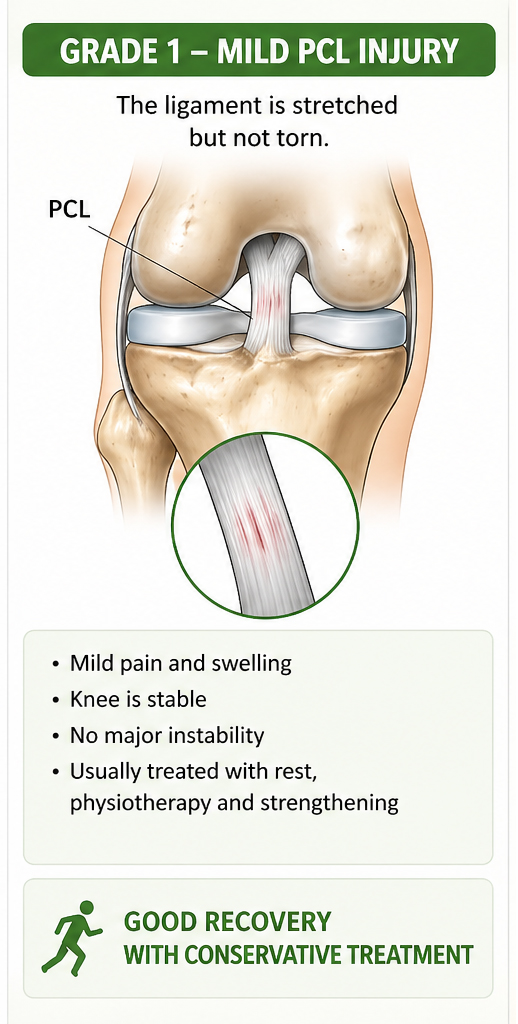
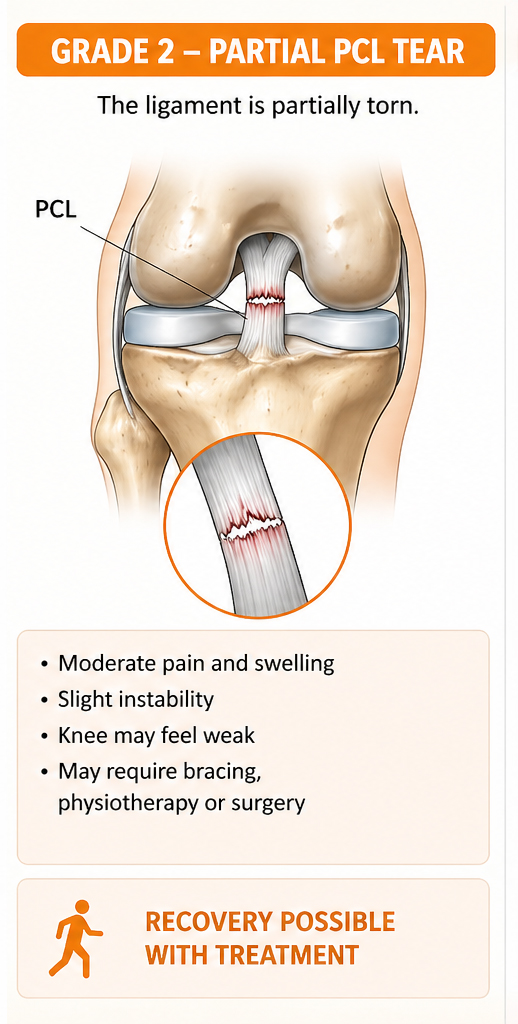
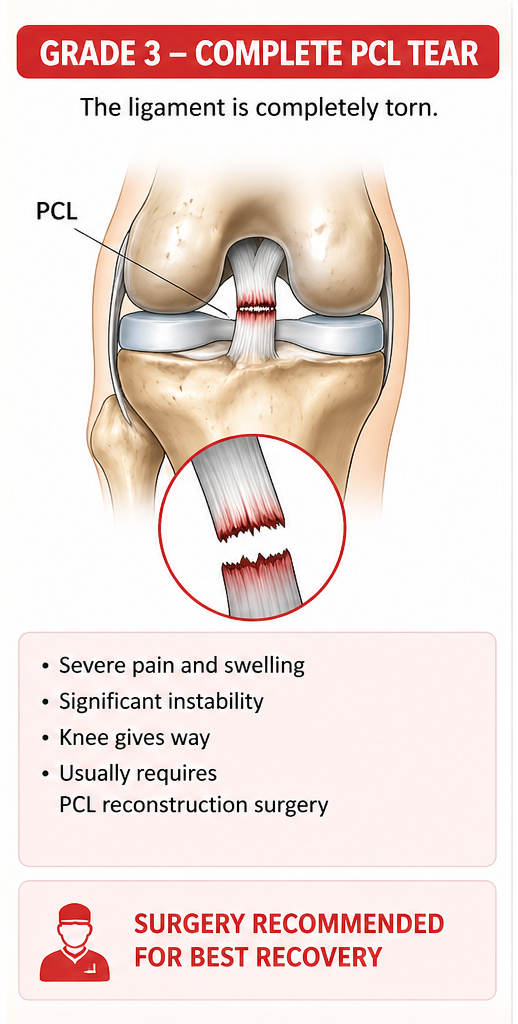
PCL injuries are classified based on the severity of ligament damage.
Treatment: Usually conservative (rest, physiotherapy).
Treatment: Bracing and rehabilitation; surgery rarely needed.
Treatment: Surgical reconstruction may be required.
The PCL helps maintain proper knee stability by:
PCL injuries typically occur due to direct trauma or high-impact injuries.
Sports that frequently involve PCL injuries include football, soccer, skiing, and wrestling.
Common signs include:
Some mild PCL injuries may not cause severe symptoms initially.
Orthopedic specialists diagnose PCL injuries using:
Doctors perform specific tests such as:
Surgery may be recommended when:
PCL reconstruction involves:
Common graft sources include:
The procedure is typically done using minimally invasive arthroscopic surgery.
Consult an orthopedic specialist if you experience:
Early diagnosis helps prevent long-term joint damage or arthritis.