
Knee Replacement, medically known as Total Knee Replacement, is a surgical procedure in which a damaged or worn-out knee joint is replaced with an artificial implant. The procedure is usually recommended when severe pain, stiffness, or loss of movement affects daily activities and other treatments are no longer effective.
During surgery, the damaged cartilage and bone in the knee joint are removed and replaced with prosthetic components made of metal, plastic, or ceramic materials. These implants recreate the natural movement of the knee and significantly reduce pain.
Knee replacement is one of the most successful procedures in modern Orthopedic Surgery, helping millions of patients regain mobility and improve their quality of life.
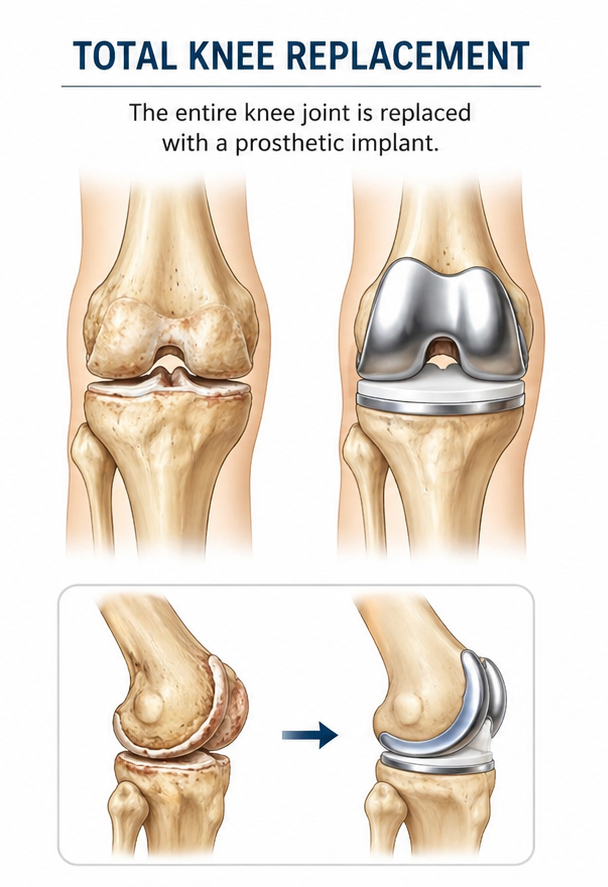
Total Knee Replacement is the most common type of knee replacement surgery.
In this procedure:
Benefits
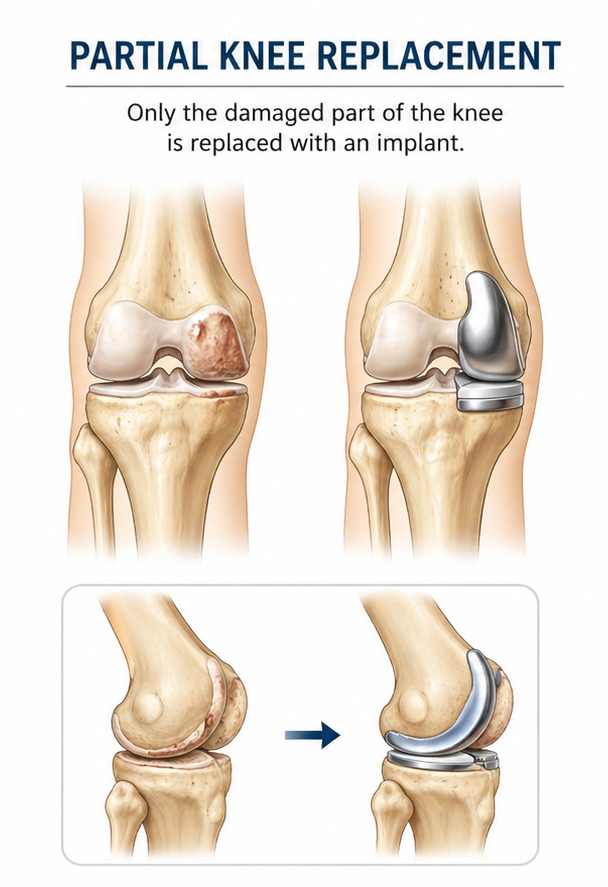
Partial Knee Replacement replaces only the damaged portion of the knee rather than the whole joint.
It is suitable when arthritis affects only one compartment of the knee.
Advantages
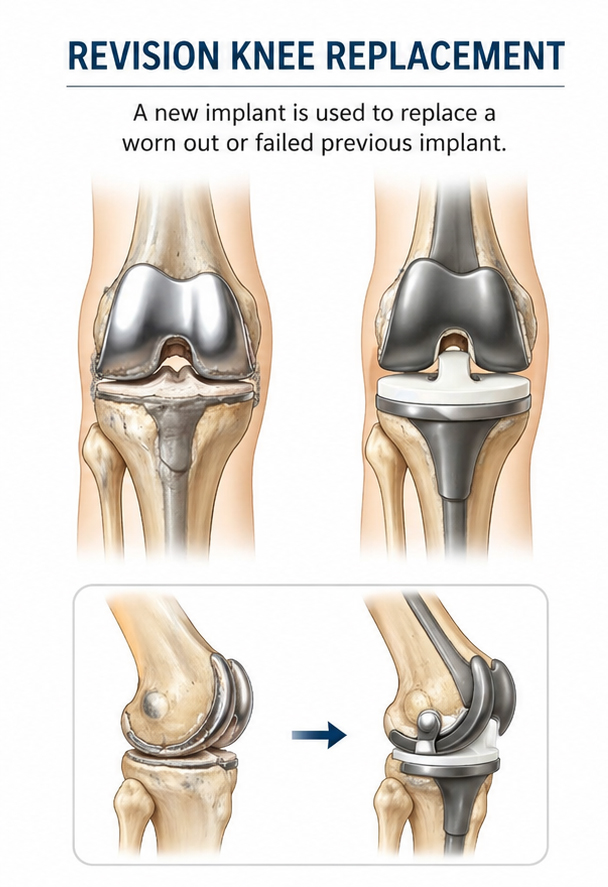
Revision Knee Replacement is performed when a previous knee implant wears out, loosens, or fails.
This procedure replaces the old implant with a new prosthetic joint.
Knee replacement is usually recommended for severe joint damage caused by conditions such as:
You should consult an orthopedic specialist if you experience:
Early consultation helps prevent further joint damage and allows better treatment planning.
Modern anesthesia and pain management techniques make the procedure comfortable. Most patients experience significant pain relief after recovery.
Modern anesthesia and pain management techniques make the procedure comfortable. Most patients experience significant pain relief after recovery.
Most knee implants last 15–25 years, depending on activity level and lifestyle.
Yes. With proper rehabilitation and physiotherapy, most patients regain normal walking ability.
Knee replacement is considered a highly safe and effective orthopedic procedure with a success rate of over 90–95%.