The meniscus is a C-shaped piece of cartilage in the knee joint that acts as a cushion between the thigh bone (Femur) and the shin bone (Tibia).
Each knee has two menisci that help absorb shock, stabilize the joint, and distribute body weight evenly across the knee. Without the meniscus, the bones would rub directly against each other, leading to pain and joint damage.
Menisci are made of fibrocartilage, which is strong yet flexible, allowing the knee to move smoothly during walking, running, and jumping.
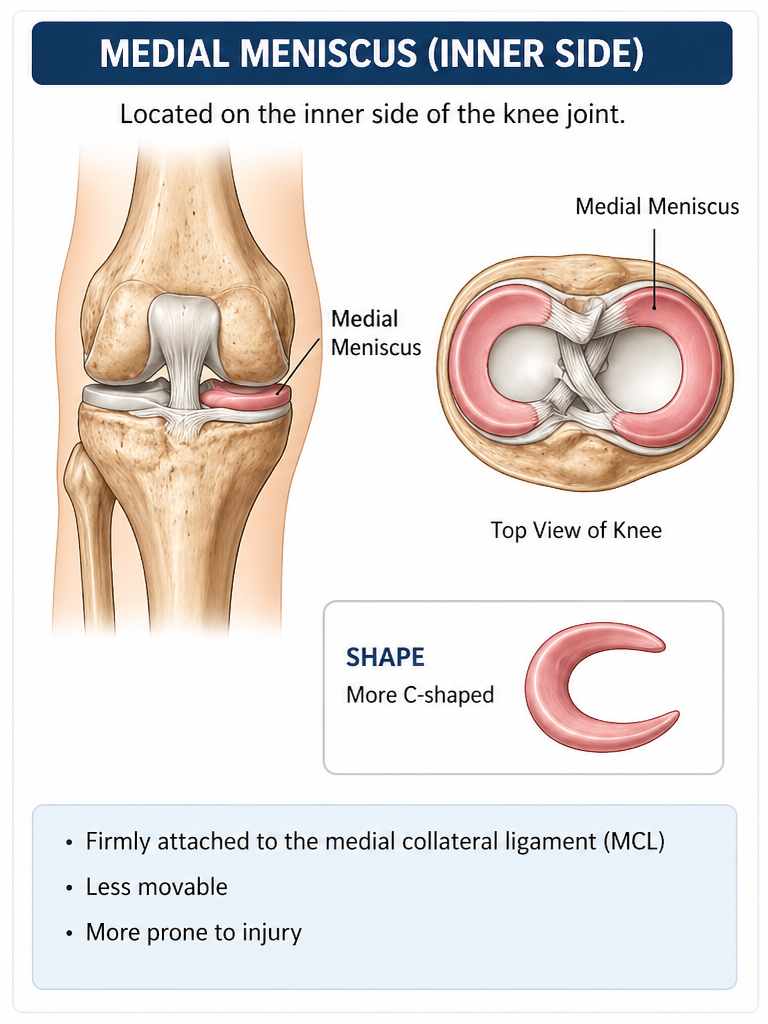
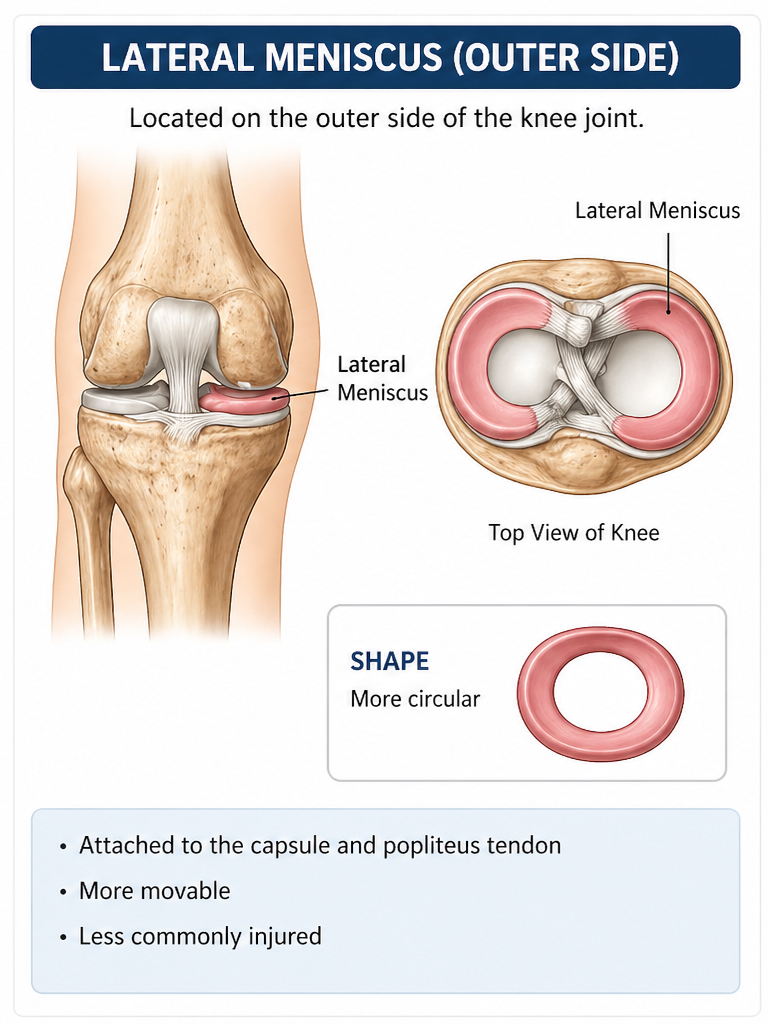
Each knee has two types of meniscus:
The meniscus performs several important roles in knee health:
Meniscus injuries may occur due to sports activities, sudden twisting, trauma, or age-related degeneration.
A tear running along the length of the meniscus.
A severe form of longitudinal tear where a portion of the meniscus flips into the joint.
Starts from the inner edge and extends outward.
Splits the meniscus into upper and lower parts.
Combination of multiple tear patterns, usually seen in older patients.
Occurs due to age-related wear and tear of the meniscus.
Common symptoms include:
Orthopedic specialists diagnose meniscus injuries through:
If symptoms persist or the tear is severe, surgery may be required.
Consult an orthopedic specialist if you experience:
The meniscus is an essential cartilage structure in the knee that acts as a shock absorber and stabilizer. Injuries can occur due to trauma, sports, or aging. Early diagnosis and proper treatment—whether conservative care or minimally invasive surgery—can help restore knee function and prevent long-term joint damage.