A Cuff Tear is a condition where one or more of the tendons in the Shoulder Cuff become torn or damaged. The cuff is a group of four muscles and tendons that stabilize the shoulder joint and allow smooth arm movements such as lifting, rotating, and reaching overhead.
These tendons connect the shoulder muscles to the Humerus (upper arm bone). When the tendon is torn due to injury, degeneration, or overuse, it can cause shoulder pain, weakness, and difficulty in arm movement.
The cuff consists of four muscles:
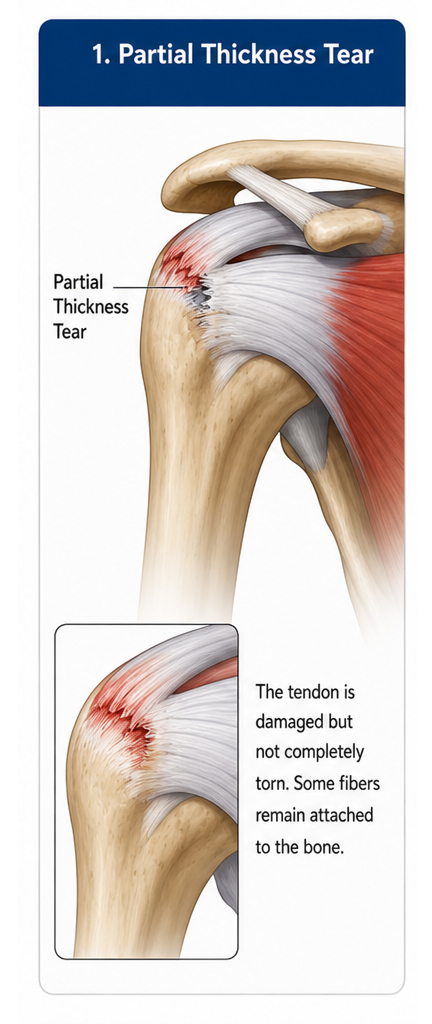
A Partial Cuff Tear occurs when the tendon is damaged but not completely severed.
Characteristics
This type is common in early-stage injuries or degenerative changes.
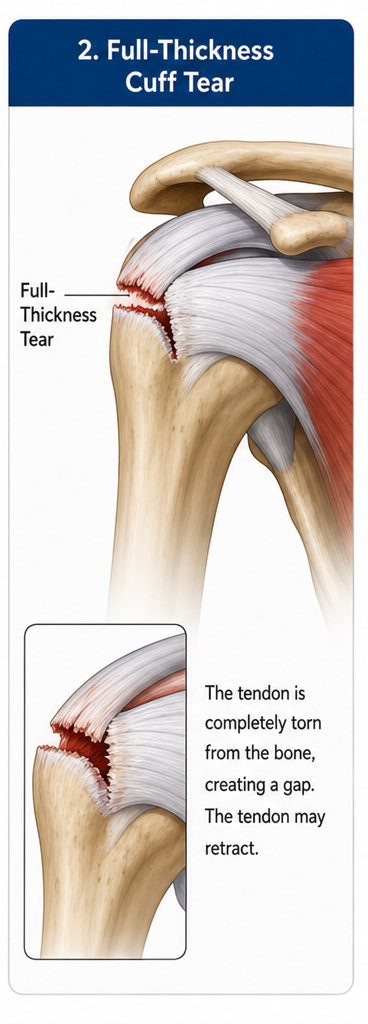
A Full-Thickness Cuff Tear occurs when the tendon is completely torn from the bone.
Characteristics
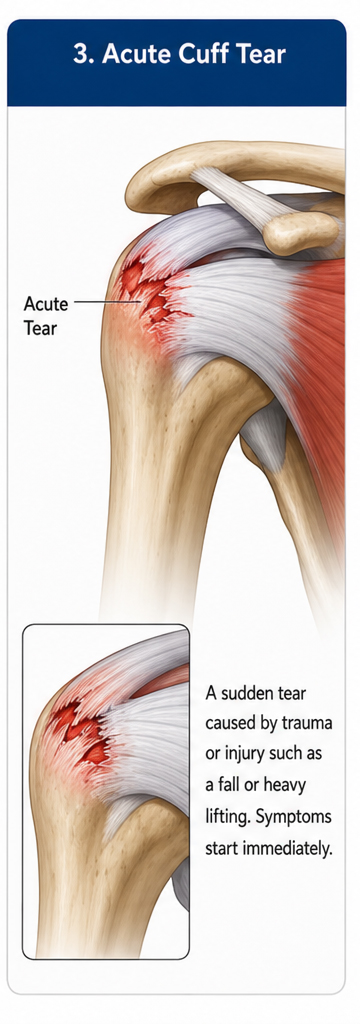
An Acute Cuff Tear happens suddenly due to trauma or injury.
Common Causes
Symptoms appear immediately after injury.
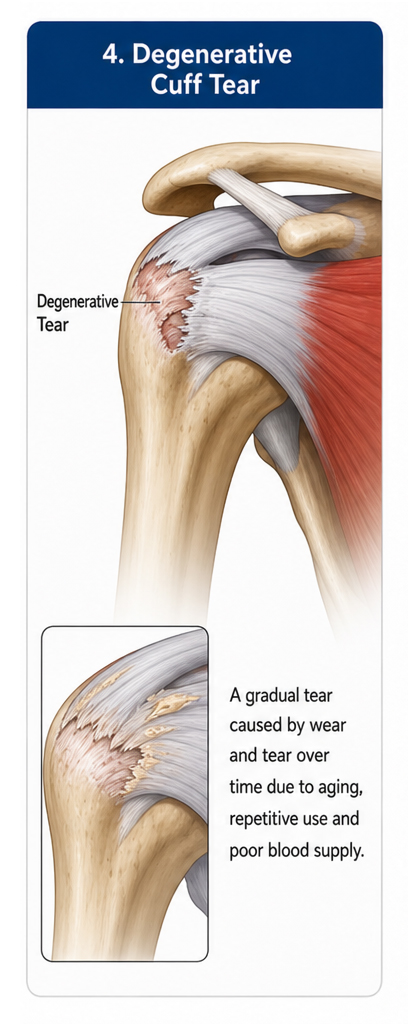
A Degenerative Cuff Tear develops gradually over time due to wear and tear.
Common Causes
This type is more common in people with physically demanding jobs or athletes.
Patients with a cuff tear may experience:
Several factors increase the chances of developing a cuff tear:
Doctors diagnose a cuff tear using:
The orthopedic specialist checks:
Common imaging methods include:
Surgery is recommended when:
1. Arthroscopic Cuff Repair
Minimally invasive surgery using a small camera and instruments.
2. Open Cuff Repair
Traditional surgery for large tears.
3. Reverse Shoulder Replacement
Used in severe cases with massive cuff tears and arthritis.
If a cuff tear is not treated early, it may lead to:
A cuff tear is a common shoulder injury affecting the tendons responsible for shoulder stability and movement. Early diagnosis and treatment—whether conservative or surgical—can help restore shoulder function and prevent long-term complications.