Sports and physical activities offer many health benefits, including improved cardiovascular fitness, muscle strength, and mental well-being. However, athletes—whether professional or recreational—face a significant risk of injuries during training and competition. Prompt diagnosis and treatment of these injuries are essential to ensure faster recovery, reduced complications, and a safe return to sports.
Modern sports medicine emphasizes early medical evaluation, rehabilitation, and injury management, which play a crucial role in maintaining long-term joint health and athletic performance.
Understanding Sports Injuries
Sports injuries refer to damage to muscles, ligaments, tendons, bones, or joints that occurs during physical activity. These injuries may develop suddenly due to trauma or gradually due to repetitive stress.
Sports injuries are generally classified into two main categories:
1. Acute Injuries
These injuries occur suddenly during activity.
Examples include:
- Ligament tears (ACL, MCL)
- Muscle strains
- Fractures
- Dislocations
- Sprains
2. Chronic Injuries
These injuries develop gradually over time due to repetitive movement or overuse.
Examples include:
- Tendinitis
- Stress fractures
- Runner’s knee
- Shin splints
Studies show that knee and shoulder injuries are among the most common sports injuries, especially in athletes involved in high-impact sports.
How Common Are Sports Injuries?
Sports injuries are extremely common worldwide.
Research and epidemiological studies indicate:
- Knee injuries account for around 41% of sports-related trauma in athletes.
- Among knee injuries, ACL injuries contribute to about 20% of cases.
- Sports injuries occur frequently in athletes aged 16–20 years, especially those involved in competitive sports.
- Large injury studies across multiple sports confirm that injuries during matches are significantly higher than during training sessions.
These findings highlight the need for timely diagnosis and early treatment to prevent long-term complications.
Why Early Treatment Is Crucial
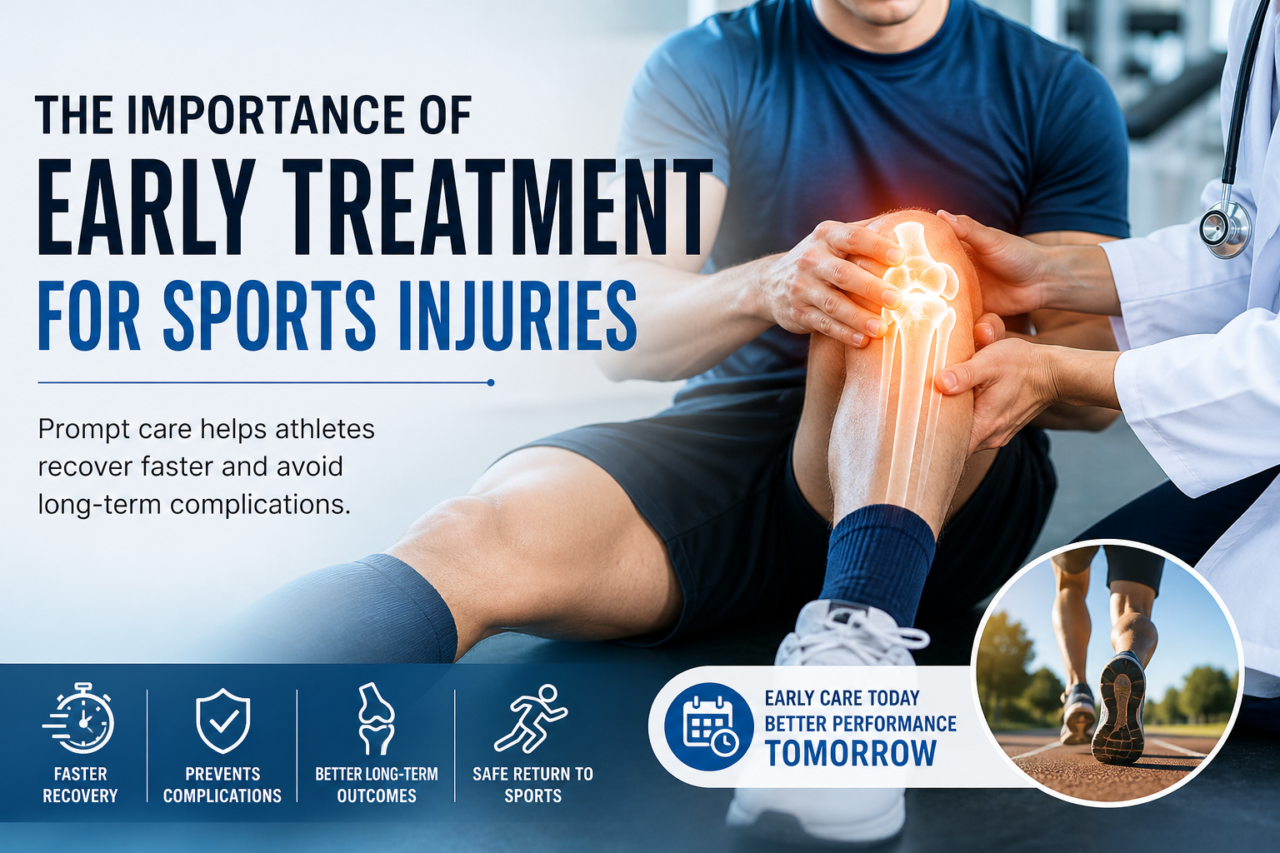
Early treatment after a sports injury can make a major difference in the recovery process. When injuries are treated promptly, doctors can prevent further tissue damage and accelerate healing.
Key Benefits of Early Treatment
Faster Recovery Time
Early rehabilitation programs can significantly reduce the time required for athletes to return to sports.
Research has shown that starting rehabilitation within two days after a muscle injury shortened recovery time by approximately three weeks compared to delayed treatment.
This demonstrates how prompt medical care can help athletes regain strength and mobility more quickly.
Better Surgical Outcomes (When Needed)
In some cases, injuries like ACL tears or cartilage damage require surgical intervention.
Early surgical evaluation allows orthopedic specialists to:
- Repair damaged tissues sooner
- Prevent joint degeneration
- Improve long-term outcomes
Athletes who receive timely surgical treatment often experience better recovery and faster return to competition.
Common Sports Injuries That Require Early Treatment
Several sports injuries should be evaluated by an orthopedic specialist as soon as possible.
Knee Injuries
- ACL tears
- Meniscus tears
- MCL or LCL injuries
Muscle Injuries
- Hamstring strains
- Quadriceps strains
- Calf injuries
Joint Injuries
- Shoulder dislocations
- Ankle sprains
-
- Hip injuries
Bone Injuries
- Stress fractures
- Acute fractures
Early diagnosis of these injuries can prevent permanent joint damage and long rehabilitation periods.
Early Diagnosis: Key Medical Tests
Orthopedic specialists use several diagnostic tools to identify sports injuries quickly and accurately.
Physical Examination
Doctors evaluate joint stability, range of motion, and swelling.
Imaging Tests
Common diagnostic tests include:
- X-rays – identify fractures and bone damage
- MRI scans – detect ligament, tendon, and cartilage injuries
- Ultrasound scans – assess soft tissue injuries
MRI is considered the gold standard for diagnosing ligament and meniscus injuries.
Advanced Treatments
Modern sports medicine includes advanced treatments such as:
- Arthroscopic surgery
- Platelet-Rich Plasma (PRP) therapy
- Stem cell therapy
- Minimally invasive ligament reconstruction
These treatments help athletes recover faster and return to peak performance.
When Should Athletes See a Doctor?
Athletes should seek medical attention if they experience:
- Persistent pain after sports activity
- Severe swelling
- Joint instability
- Limited movement
- Difficulty walking or bearing weight
- A popping sound during injury
Early consultation with an orthopedic specialist ensures accurate diagnosis and faster treatment.
The Role of Sports Medicine in Modern Athletics
Sports medicine has evolved significantly in recent years. Advanced diagnostic technologies, minimally invasive surgical procedures, and scientifically designed rehabilitation programs now allow athletes to recover faster and return to sports safely.
Medical teams—including orthopedic surgeons, physiotherapists, and sports trainers—work together to provide comprehensive injury management and performance optimization.
Conclusion
Early treatment is one of the most important factors in the successful recovery of sports injuries. Prompt diagnosis and appropriate medical care can help athletes reduce recovery time, prevent long-term complications, and safely return to their sport.
With advances in sports medicine, rehabilitation, and injury prevention strategies, athletes today have better opportunities than ever to recover fully and maintain peak performance.