Pediatric fractures are among the most common injuries in childhood, especially during active play, sports, and accidental falls. Because children are naturally energetic and their bones are still developing, fractures of the wrist, elbow, and forearm occur frequently. Understanding these injuries helps parents recognize symptoms early and seek timely orthopedic care.
Research shows that forearm fractures alone account for about 41% of all pediatric fractures, making them the most common bone injuries in children.
This article explains the most common fractures in children, their causes, symptoms, treatment options, and prevention strategies, supported by current research data.
Understanding Pediatric Fractures
A fracture is a break or crack in a bone. Children’s bones differ from adult bones because they are more flexible and contain growth plates, which allow bones to grow as the child develops.
Because of this flexibility, children often experience unique fracture patterns such as:
- Greenstick fractures
- Buckle (torus) fractures
- Growth plate fractures
These fractures may heal faster than adult fractures but require careful management to prevent growth complications.
Research Statistics on Pediatric Fractures
Recent orthopedic research provides insight into how common these injuries are:
- Forearm fractures account for approximately 41% of all fractures in children.
- Studies report an incidence of about 738 pediatric distal forearm fractures per 100,000 children each year.
- Nearly 2% of boys around age 13 experience a forearm fracture annually.
- Elbow fractures represent about 28% of pediatric fractures, often occurring after falls or sports injuries.
These statistics highlight why early diagnosis and treatment are critical in pediatric orthopedic care.
Most Common Pediatric Fractures
1. Wrist Fractures (Distal Radius Fractures)
Wrist fractures are among the most frequent injuries in children, particularly during sports or playground accidents.
Causes
- Falling on an outstretched hand
- Bicycle accidents
- Sports injuries
- Playground falls
Common Types
- Buckle fractures
- Greenstick fractures
- Distal radius fractures
Symptoms
- Pain and swelling around the wrist
- Difficulty moving the hand
- Visible deformity in severe cases
Treatment
Most wrist fractures in children are treated with:
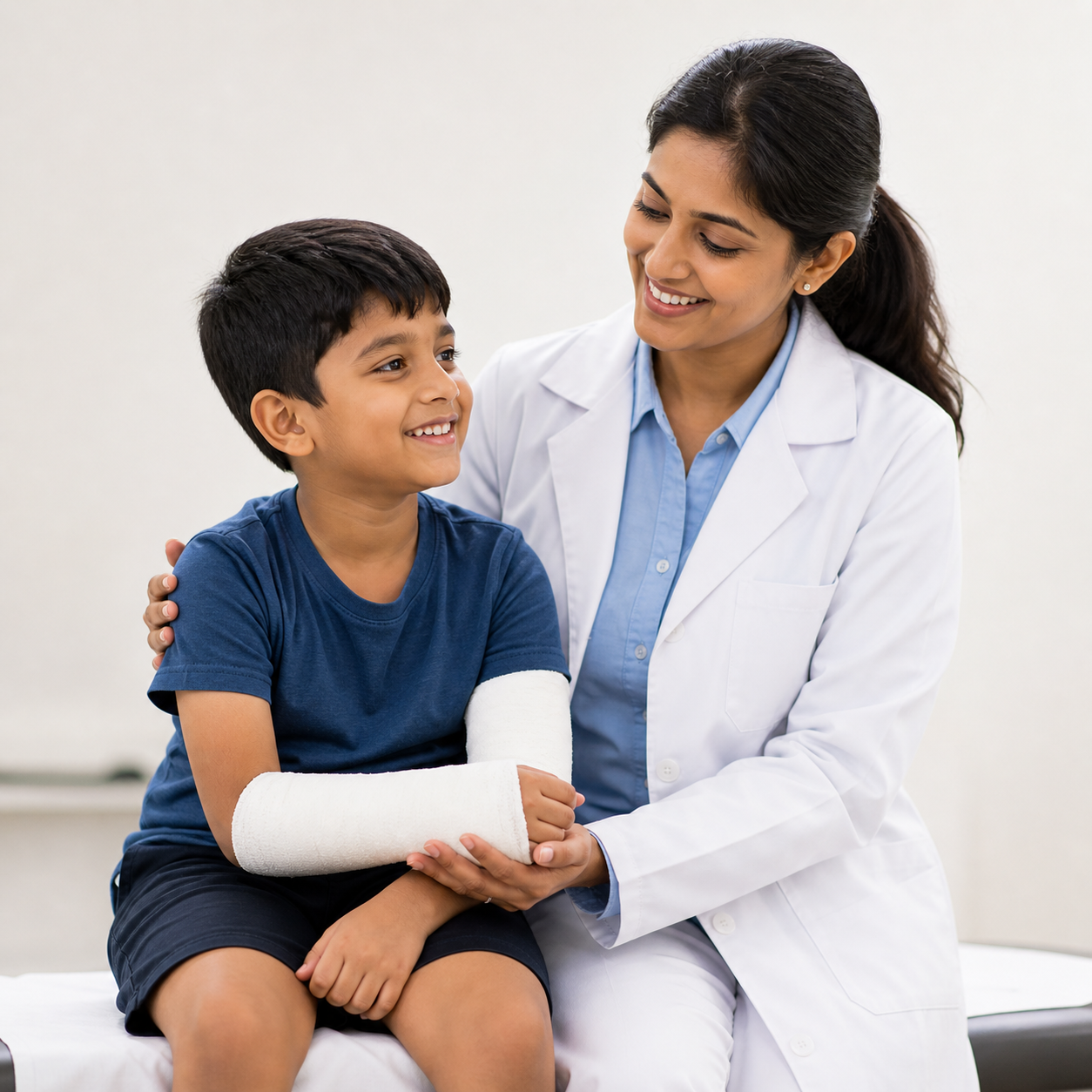
- Immobilization using a cast or splint
- Pain management
- Follow-up X-rays to monitor healing
2. Elbow Fractures
Elbow fractures are the second most common fractures in children and can sometimes lead to complications if untreated.
Common Types
- Supracondylar fractures
- Lateral condyle fractures
- Radial head fractures
Causes
- Falling on an outstretched arm
- Playground injuries
- Contact sports
Symptoms
- Severe elbow pain
- Swelling and stiffness
- Limited arm movement
Possible Complications
If not treated properly, elbow fractures may cause:
- Nerve injury
- Blood vessel damage
- Deformities in arm growth
Treatment
Treatment may include:
- Casting or splinting
- Closed reduction (bone realignment)
- Surgery in severe cases
3. Forearm Fractures
The forearm consists of two bones: the radius and ulna, and fractures in this area are extremely common in children.
Causes
- Falls from playground equipment
- Sports injuries
- Bicycle accidents
Types of Forearm Fractures
- Greenstick fractures
- Complete fractures
- Growth plate fractures
Research analyzing over 4,500 pediatric forearm fractures found that the average age of injury was around 10 years, with boys slightly more affected than girls.
Symptoms
- Pain in the arm
- Swelling or bruising
- Difficulty rotating the forearm
Treatment Options
- Casting or splinting
- Closed reduction
- Surgical fixation in complex fractures
Children usually recover quickly due to high bone remodeling capacity.
Why Children’s Bones Heal Faster
Children’s bones heal faster because:
- Their bones contain active growth plates
- Blood supply to bones is stronger
- Bone remodeling is more efficient
In many cases, minor alignment issues can correct themselves during growth, which is why pediatric fractures often heal better than adult fractures.
When Parents Should Seek Medical Attention
Parents should consult an orthopedic doctor immediately if a child has:
- Severe pain after a fall
- Swelling around joints
- Visible bone deformity
- Difficulty moving the arm or wrist
- Persistent pain after injury
Early diagnosis prevents complications such as growth plate damage or joint deformities.
Conclusion
Pediatric fractures are common but highly treatable when diagnosed early. Wrist, elbow, and forearm fractures account for the majority of childhood bone injuries, often caused by falls, sports activities, or playground accidents.
Research shows that forearm fractures alone represent over 40% of pediatric fractures, highlighting the importance of awareness among parents and caregivers.
By recognizing the symptoms of fractures and seeking timely orthopedic care, parents can ensure their child recovers quickly and continues to grow with strong, healthy bones.