Introduction
Joint dislocations in children are relatively uncommon compared with fractures, but when they occur they require immediate medical attention. A dislocation happens when the bones that form a joint move out of their normal position, disrupting the surrounding ligaments, cartilage, and soft tissues.
Children’s bones are still developing, and their joints contain growth plates that are more vulnerable to injury. Without proper treatment, a dislocated joint may lead to recurrent instability, chronic pain, or long-term joint damage.
Recent orthopedic research shows that early intervention significantly improves outcomes and reduces the chances of repeated dislocations in pediatric patients.
What Is a Pediatric Joint Dislocation?
A pediatric joint dislocation occurs when the bones of a joint are forced out of alignment due to trauma, sports injuries, falls, or accidents.
Commonly affected joints include:
- Knee (patellar dislocation)
- Elbow
- Shoulder
- Fingers
- Hip (rare but serious)
Research indicates that joint dislocations occur in approximately 69 per 100,000 children annually, with the highest rates seen during adolescence.
The increased risk during teenage years is largely due to sports participation and rapid physical growth.
Common Types of Pediatric Dislocations
1. Patellar (Kneecap) Dislocation
This is the most common knee dislocation in children and adolescents.
Symptoms
- Sudden knee pain
- Visible kneecap displacement
- Swelling and inability to straighten the leg
Research shows that patellar dislocations account for about 49% of pediatric joint dislocations, making them the most frequent type.
2. Elbow Dislocation
Elbow dislocations often occur when a child falls onto an outstretched hand.
Symptoms
- Severe elbow pain
- Deformity or swelling
- Limited arm movement
The elbow is one of the most commonly dislocated joints in children after the knee.
3. Shoulder Dislocation
Although less common in children than adults, shoulder dislocations can occur during sports or trauma.
Symptoms
- Shoulder deformity
- Severe pain and inability to move the arm
- Numbness or weakness
Studies show that about 44% of pediatric shoulder dislocations recur within about 15 months, highlighting the importance of early treatment.
Causes of Pediatric Dislocations
Several factors increase the risk of joint dislocations in children:
1. Sports Injuries
Contact sports such as football, basketball, gymnastics, and wrestling are common causes.
2. Falls or Accidents
Playground falls or bicycle accidents frequently lead to elbow or shoulder dislocations.
3. Ligament Laxity
Some children have naturally loose ligaments, making joints more prone to instability.
4. Anatomical Variations
Conditions like patella alta or trochlear dysplasia increase the risk of repeated knee dislocations.
Research indicates that anatomical abnormalities significantly increase recurrence rates in knee dislocations.
Why Early Treatment Is Important
Untreated joint dislocations can lead to serious complications.
Potential Risks of Delayed Treatment
- Recurrent dislocations
- Joint instability
- Cartilage damage
- Early arthritis
- Growth plate injuries
Studies show recurrence rates between 15% and 50% after first-time patellar dislocation, especially if not properly managed.
Early orthopedic care reduces these risks and helps restore joint stability.
Diagnosis of Pediatric Dislocations
Orthopedic specialists use several diagnostic tools to confirm joint dislocation and assess associated injuries.
Physical Examination
Doctors evaluate swelling, deformity, range of motion, and joint stability.
X-Ray
Helps confirm the dislocation and rule out fractures.
MRI Scan
Provides detailed images of:
- Ligaments
- Cartilage
- Growth plates
MRI is especially important in knee and shoulder dislocations.
Treatment Options for Pediatric Dislocations
Treatment depends on the joint involved, severity of injury, and whether the child has recurrent instability.
1. Immediate Joint Reduction
The first step in treatment is joint reduction, where the doctor gently moves the bones back into their normal position.
This procedure is usually done under:
- Sedation
- Local anesthesia
Prompt reduction reduces pain and prevents tissue damage.
2. Immobilization
After reduction, the joint is stabilized using:
- Splints
- Slings
- Braces
Immobilization allows injured ligaments and soft tissues to heal.
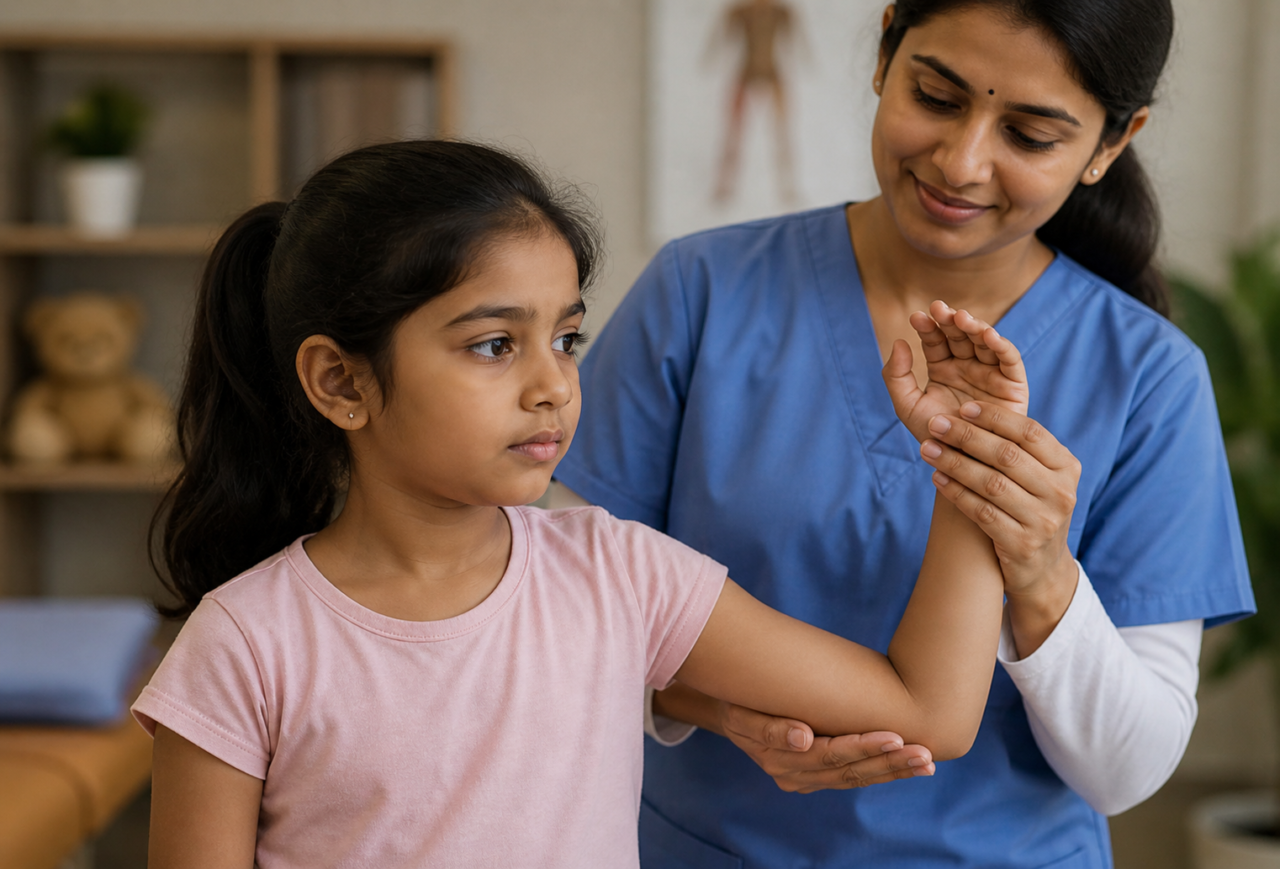
3. Physiotherapy and Rehabilitation
Rehabilitation plays a crucial role in recovery.
Key goals include:
- Restoring range of motion
- Strengthening surrounding muscles
- Preventing recurrent instability
Physical therapy often begins within a few weeks after injury.
4. Surgical Treatment (When Needed)
Surgery may be recommended when:
- The joint repeatedly dislocates
- Ligaments are severely damaged
- There are associated fractures
- Non-surgical treatment fails
For example, research shows that about 20% of children with recurrent shoulder dislocation eventually require surgical stabilization.
Common surgical procedures include:
- Ligament reconstruction
- Arthroscopic stabilization
- Realignment procedures
Modern minimally invasive arthroscopic surgery allows faster recovery and less tissue damage.
Preventing Recurrent Dislocations
Prevention strategies include:
- Strengthening muscles around joints
- Wearing protective sports gear
- Proper warm-up before sports
- Correct training techniques
Regular follow-ups with orthopedic specialists help monitor joint stability during recovery.
When Should Parents See an Orthopedic Doctor?
Seek immediate medical attention if a child experiences:
- Severe joint pain after injury
- Visible joint deformity
- Inability to move the limb
- Swelling or bruising
- Repeated joint instability
Early diagnosis ensures proper treatment and reduces the risk of long-term complications.
Conclusion
Pediatric joint dislocations may appear minor initially, but they can have significant long-term effects if not treated properly. Research shows that recurrence rates are relatively high in certain joints, especially the knee and shoulder, emphasizing the need for early diagnosis and expert orthopedic care.
With modern imaging, advanced rehabilitation, and minimally invasive surgical techniques, most children can recover fully and return to normal activities without long-term joint instability.