Introduction
Hip osteoarthritis is one of the most common causes of chronic hip pain and disability in adults, especially those over 50. It occurs when the cartilage that cushions the hip joint gradually wears down, causing bones to rub against each other. This leads to pain, stiffness, and reduced mobility.
According to the World Health Organization, osteoarthritis is among the leading causes of disability worldwide, affecting more than 528 million people globally. When conservative treatments fail to relieve symptoms, hip replacement surgery may become the most effective option for restoring mobility and improving quality of life.
What Is Hip Osteoarthritis?
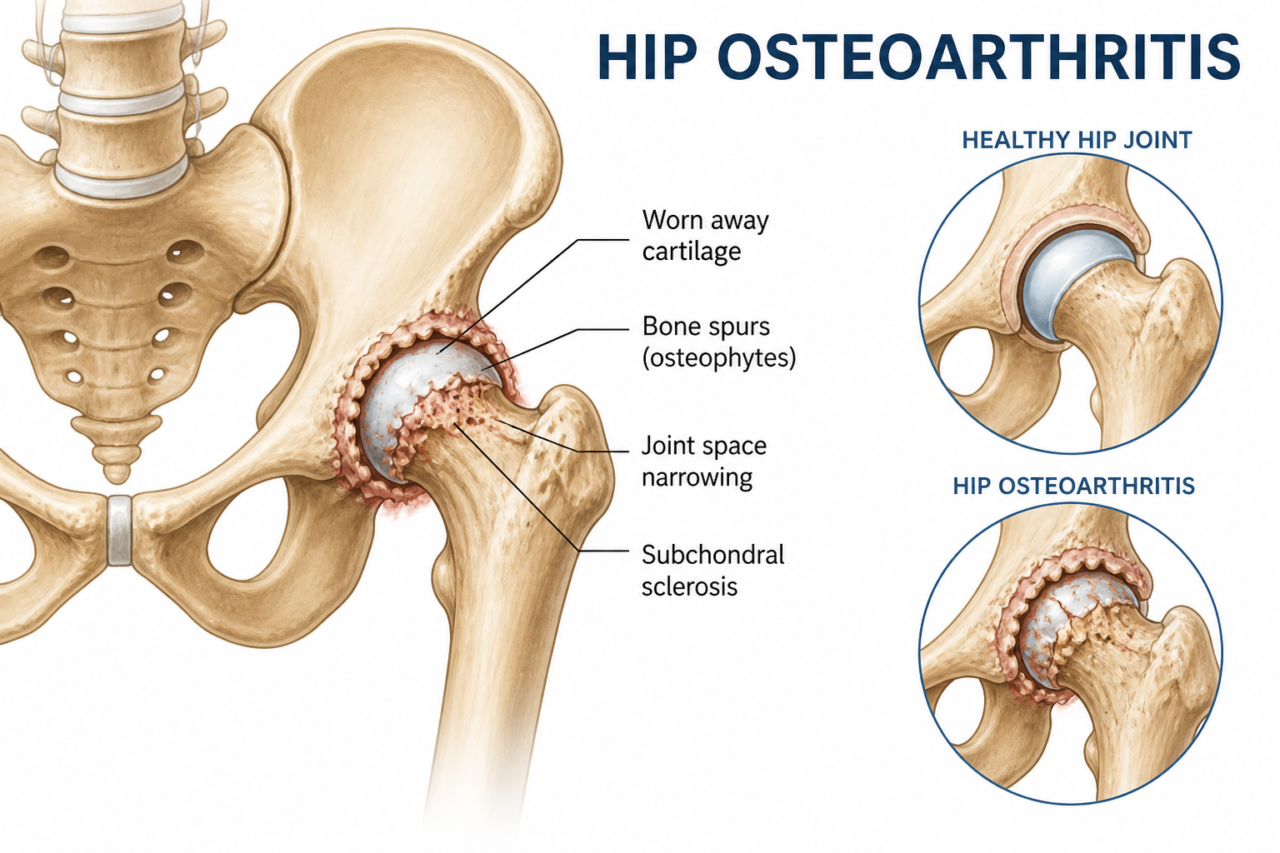
Hip osteoarthritis is a degenerative joint disease that affects the cartilage of the hip joint.
The hip is a ball-and-socket joint, where:
- The femoral head (ball) fits into the acetabulum (socket) of the pelvis.
- Cartilage allows smooth movement.
In osteoarthritis:
- Cartilage breaks down
- Bones rub together
- Inflammation develops
- Joint function deteriorates
Over time, the joint becomes painful and stiff, limiting everyday activities such as walking, climbing stairs, or bending.
Research Data and Statistics
Recent orthopedic research highlights the growing impact of hip osteoarthritis:
- A 2023 study in the American Academy of Orthopaedic Surgeons reported that hip replacement surgeries have increased by nearly 200% in the past two decades due to aging populations and improved surgical techniques.
- The Centers for Disease Control and Prevention estimates that 1 in 4 adults may develop symptomatic hip osteoarthritis in their lifetime.
- Research published in the The Lancet suggests that total hip replacement has a success rate above 95%, making it one of the most successful orthopedic procedures.
- In India, the Indian Orthopaedic Association reports a rapid rise in hip replacement surgeries due to increased life expectancy and sedentary lifestyles.
Causes of Hip Osteoarthritis
Several factors can lead to hip osteoarthritis:
Age
Cartilage naturally wears down over time, making osteoarthritis more common in older adults.
Previous Injuries
Hip fractures, dislocations, or sports injuries may increase the risk.
Obesity
Excess body weight puts additional stress on the hip joint.
Genetics
Family history can increase susceptibility to osteoarthritis.
Congenital Hip Disorders
Conditions such as hip dysplasia may lead to early joint degeneration.
Symptoms of Hip Osteoarthritis
Common symptoms include:
- Persistent hip pain
- Stiffness in the hip joint
- Pain radiating to the groin, thigh, or knee
- Difficulty walking or standing
- Reduced range of motion
- Grinding sensation in the joint
Symptoms typically worsen gradually over time.
Diagnosis of Hip Osteoarthritis
Orthopedic specialists use several methods to diagnose the condition:
Physical Examination
Doctors evaluate joint movement, pain levels, and walking patterns.
Imaging Tests
Common diagnostic tools include:
- X-rays
- MRI scans
- CT scans
These tests help assess cartilage loss, bone damage, and joint alignment.
When Is Hip Replacement Surgery the Best Option?
Hip replacement surgery becomes the best option when:
Severe Pain Persists
Pain continues despite medication, therapy, and lifestyle changes.
Daily Activities Are Difficult
Simple tasks such as walking, dressing, or sitting become painful.
Joint Damage Is Advanced
Imaging shows severe cartilage loss and bone damage.
Reduced Quality of Life
Sleep disturbances, limited mobility, and chronic pain affect everyday living.
At this stage, orthopedic surgeons may recommend total hip replacement surgery.
What Happens During Hip Replacement Surgery?
Hip replacement surgery involves replacing damaged joint parts with artificial implants.
The procedure typically includes:
- Removing damaged cartilage and bone
- Replacing the hip socket with a prosthetic cup
- Inserting a metal or ceramic ball attached to a stem into the femur
Modern implants are designed to last 15–25 years or longer.
Latest Techniques in Hip Replacement (2026)
Recent advancements in orthopedic surgery have improved outcomes significantly.
Minimally Invasive Surgery
Smaller incisions lead to:
- Less pain
- Faster recovery
- Reduced hospital stay
Robotic-Assisted Surgery
Systems like Mako Robotic‑Arm Assisted Surgery System allow surgeons to perform highly precise joint replacements.
Advanced Implant Materials
Modern implants use:
- Ceramic components
- Highly cross-linked polyethylene
- Titanium alloys
These materials increase durability and reduce wear.
Benefits of Hip Replacement Surgery
Hip replacement surgery offers several advantages:
- Significant pain relief
- Improved mobility
- Better joint function
- Increased independence
- Enhanced quality of life
Studies show that over 90% of patients report major improvement after surgery.
Conclusion
Hip osteoarthritis can significantly affect mobility and daily life, but early diagnosis and proper treatment can help manage the condition effectively. When non-surgical treatments no longer provide relief, hip replacement surgery offers a safe and highly successful solution.
With modern technologies, advanced implants, and improved surgical techniques, patients today experience faster recovery, long-lasting results, and a renewed ability to live active lives.