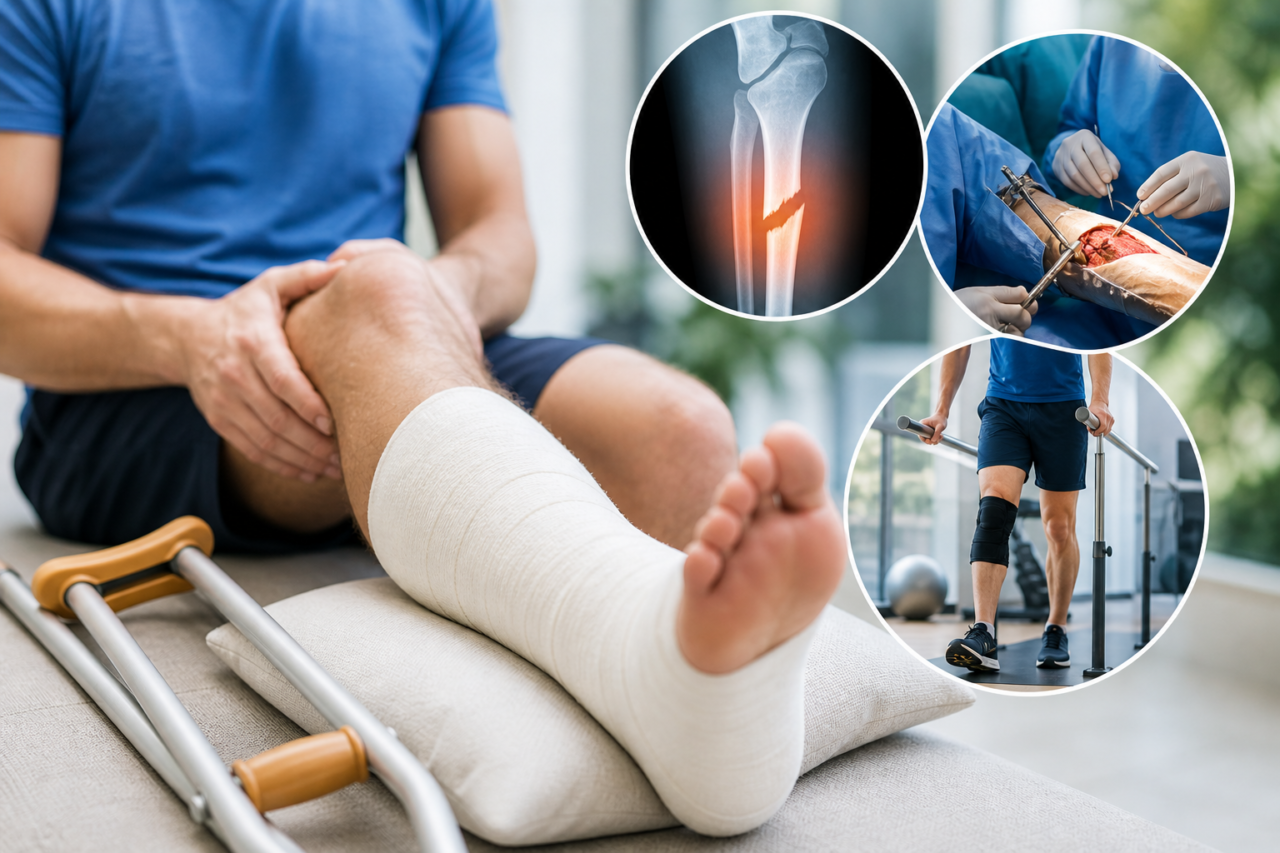
Immediate care and expert treatment can make all the difference after a fracture
Bone fractures are among the most common orthopedic injuries worldwide. According to studies in the field of Orthopedics and trauma medicine, millions of fractures occur each year due to accidents, sports injuries, falls, and age-related bone weakening.
Research published by the World Health Organization indicates that road accidents, sports trauma, and osteoporosis-related falls are major causes of fractures globally. Proper and timely treatment plays a crucial role in ensuring full recovery and preventing long-term complications.
This guide explains what to do immediately after a fracture, treatment options including surgery, and how to recover safely.
What is a Bone Fracture?
A bone fracture is a break, crack, or structural damage in a bone caused by trauma, stress, or underlying disease. Fractures may range from small hairline cracks to severe breaks where the bone is displaced or protrudes through the skin.
Studies from the American Academy of Orthopaedic Surgeons report that fractures account for over 16 million injuries annually worldwide, with the wrist, hip, ankle, and arm being the most commonly affected areas.
Common Causes of Bone Fractures
Fractures typically occur due to excessive force applied to a bone. The most common causes include:
1. Accidents and Trauma
Road accidents, workplace injuries, and falls are major contributors to fractures.
2. Sports Injuries
High-impact sports such as football, basketball, and skiing increase the risk of fractures.
3. Osteoporosis
People with weakened bones due to Osteoporosis are more likely to experience fractures even from minor falls.
4. Overuse or Stress
Repeated stress on bones can cause stress fractures, commonly seen in runners and athletes.
5. Age-Related Bone Weakness
Older adults have reduced bone density, making fractures more common.
Types of Bone Fractures
Orthopedic specialists classify fractures based on severity and bone alignment.
1. Closed Fracture
The bone breaks but does not pierce the skin.
2. Open (Compound) Fracture
The bone breaks and protrudes through the skin, increasing infection risk.
3. Displaced Fracture
The bone fragments move out of alignment.
4. Comminuted Fracture
The bone breaks into multiple pieces.
5. Stress Fracture
Tiny cracks caused by repetitive stress on the bone.
Immediate Steps to Take After a Bone Fracture
Taking the right steps immediately after a fracture can reduce complications and improve recovery outcomes.
1. Immobilize the Injured Area
Avoid moving the injured limb. Use a splint, sling, or any rigid support.
2. Apply Ice
Ice reduces swelling and pain. Apply for 15–20 minutes every hour.
3. Control Bleeding
If there is bleeding, apply gentle pressure with a sterile cloth.
4. Elevate the Limb
Raising the injured area above heart level helps reduce swelling.
5. Seek Medical Attention Immediately
Prompt medical care ensures proper diagnosis and treatment.
How Doctors Diagnose a Fracture
Orthopedic doctors use several diagnostic tools to confirm fractures.
Physical Examination
The doctor checks swelling, deformity, and tenderness.
Imaging Tests
Common imaging techniques include:
- X-rays (most common)
- CT scans
- MRI scans
These tests help determine the exact location, severity, and type of fracture.
Treatment Options for Bone Fractures
Treatment depends on the severity of the fracture, the bone involved, and the patient’s age and health condition.
When is Surgery Required?
Surgery is recommended when fractures cannot heal properly with casting or immobilization.
Common reasons for surgery include:
- Severe or displaced fractures
- Multiple bone fragments
- Joint fractures
- Open fractures
- Failure of bone alignment
Surgical Treatments for Bone Fractures
Modern orthopedic surgery uses advanced techniques to stabilize bones and promote faster healing.
1. Internal Fixation
Metal plates, screws, or rods are inserted to hold the bone in place.
2. External Fixation
Metal pins and rods outside the body stabilize the fracture.
3. Intramedullary Nailing
A metal rod is inserted into the bone’s marrow cavity.
4. Joint Replacement Surgery
Severe fractures near joints may require replacement procedures such as Total Hip Replacement.
According to research published in the Journal of Orthopaedic Trauma, surgical fixation significantly improves recovery outcomes for complex fractures and allows earlier mobility.
Stages of Bone Healing
- Inflammation Phase – Blood clot forms around the fracture
- Repair Phase – New bone tissue develops
- Remodeling Phase – Bone regains strength and shape
Tips for Faster Fracture Recovery
Follow Medical Advice
Adhering to the doctor’s instructions improves healing.
Maintain Proper Nutrition
Calcium and vitamin D support bone regeneration.
Avoid Weight-Bearing Early
Putting pressure on a healing bone can delay recovery.
Attend Physiotherapy
Rehabilitation helps regain strength and mobility.
Stay Active Safely
Light movement prevents stiffness and improves circulation.
Possible Complications if a Fracture is Ignored
Ignoring or delaying treatment may lead to serious complications such as:
- Improper bone healing
- Chronic pain
- Joint stiffness
- Nerve or blood vessel damage
- Infection in open fractures
Research by the National Institutes of Health shows that early orthopedic intervention significantly reduces long-term disability after fractures.
How to Prevent Bone Fractures
Preventive measures can reduce fracture risk.
Maintain Strong Bones
Eat calcium-rich foods and get adequate vitamin D.
Exercise Regularly
Weight-bearing exercises strengthen bones.
Use Protective Gear
Athletes should use appropriate safety equipment.
Prevent Falls
Install safety measures for elderly individuals at home.
When Should You See an Orthopedic Doctor?
Seek medical care immediately if you experience:
- Severe pain after an injury
- Swelling or deformity
- Difficulty moving the limb
- Bone protruding through the skin
- Numbness or tingling
Early treatment ensures faster healing, better bone alignment, and improved long-term mobility.
Conclusion
A bone fracture can be a painful and stressful experience, but with the right medical care and rehabilitation, most patients recover fully. Immediate first aid, accurate diagnosis, and appropriate treatment — including surgery when required — are essential for successful recovery.
Advancements in modern orthopedic techniques now allow faster healing, improved surgical outcomes, and better long-term mobility, helping patients return to their normal activities sooner.