Introduction
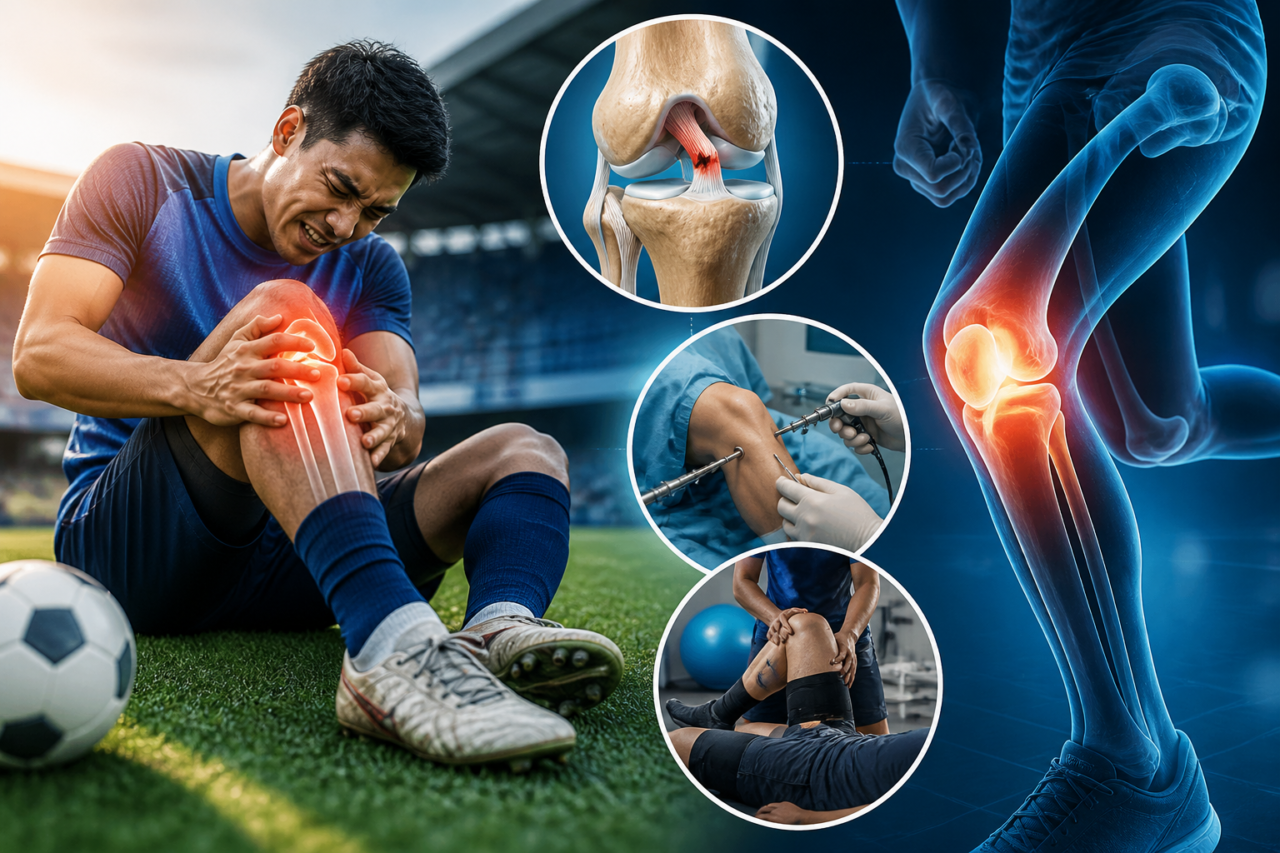
An ACL (Anterior Cruciate Ligament) tear is one of the most common and serious knee injuries in athletes. It often occurs during high-intensity sports that involve sudden stops, pivoting, jumping, or rapid direction changes such as football, basketball, cricket, skiing, and tennis.
According to research published by the American Orthopaedic Society for Sports Medicine, approximately 200,000 ACL injuries occur every year, and nearly 100,000 ACL reconstruction surgeries are performed annually.
Recent advances in arthroscopic surgery, improved graft techniques, and sports rehabilitation programs are allowing athletes to return to competition faster while maintaining long-term knee stability.
This article explains ACL injuries in athletes, causes, symptoms, latest treatment options, and the typical recovery timeline.
What Is the ACL?
The Anterior Cruciate Ligament (ACL) is one of the four main ligaments of the knee that connect the thigh bone (femur) to the shin bone (tibia).
Main functions of the ACL
- Stabilizes the knee joint
- Prevents the tibia from sliding forward
- Controls rotational movement of the knee
- Maintains balance during running and jumping
When the ACL tears, the knee becomes unstable, making it difficult to perform athletic activities.
How Common Are ACL Injuries in Athletes?
Research published in the American Journal of Sports Medicine reports that:
- 70% of ACL injuries occur during non-contact sports movements such as pivoting or landing incorrectly.
- Female athletes have 2–8 times higher risk of ACL injury compared to male athletes.
- Approximately 1 in 3500 athletes suffers an ACL tear every year.
Sports with the highest ACL injury rates include:
- Football / Soccer
- Basketball
- Skiing
- Rugby
- Cricket
- Volleyball
Common Causes of ACL Tears in Athletes
ACL injuries typically occur during sudden, high-impact movements.
1. Sudden Change in Direction
Rapid pivoting or cutting movements can strain the ligament.
2. Improper Landing from a Jump
Landing with poor knee alignment increases ligament stress.
3. Direct Collision
Contact sports may involve forceful impact to the knee.
4. Sudden Deceleration
Stopping quickly while running can overload the ligament.
5. Weak Muscles Around the Knee
Poor strength or imbalance increases injury risk.
Symptoms of an ACL Tear
Athletes often experience immediate symptoms when the injury occurs.
Common signs include:
- A popping sound at the time of injury
- Severe knee pain
- Rapid swelling within hours
- Knee instability or “giving way”
- Difficulty walking or bearing weight
- Reduced range of motion
If these symptoms occur, immediate orthopedic evaluation is recommended.
How ACL Tears Are Diagnosed
Doctors use a combination of clinical examination and imaging tests.
Physical Examination
Orthopedic specialists perform tests such as:
- Lachman Test
- Pivot Shift Test
- Anterior Drawer Test
Imaging Tests
MRI scans are the most accurate method to confirm ligament damage.
Research from the National Institutes of Health shows MRI has over 90–95% accuracy in diagnosing ACL tears.
Latest Treatment Options for ACL Tears
Treatment depends on:
- Age
- Activity level
- Severity of injury
- Sports participation
Athletes usually require surgical reconstruction to return to competitive sports.
2. ACL Reconstruction Surgery
ACL reconstruction is typically performed using arthroscopic surgery, a minimally invasive procedure.
Procedure Overview
- Small incisions are made around the knee
- A tiny camera (arthroscope) guides the surgery
- The torn ACL is replaced with a graft
Types of Grafts Used
1. Patellar Tendon Graft
Common in professional athletes due to high strength.
2. Hamstring Tendon Graft
Less postoperative pain and good flexibility.
3. Quadriceps Tendon Graft
Increasingly used due to strong biomechanical stability.
Research from the American Academy of Orthopaedic Surgeons shows ACL reconstruction success rates exceed 90% in active individuals.
Modern Advances in ACL Surgery
Recent innovations have improved surgical outcomes significantly.
1. Arthroscopic Minimally Invasive Surgery
- Smaller incisions
- Less tissue damage
- Faster recovery
2. Anatomical ACL Reconstruction
Surgeons now place grafts in the exact anatomical position of the original ligament.
3. Biological Augmentation
Use of platelet-rich plasma (PRP) to enhance healing.
4. Computer-Assisted Surgery
Improves graft placement accuracy.
Studies from the International Society of Arthroscopy, Knee Surgery and Orthopaedic Sports Medicine show these techniques improve long-term knee stability and reduce re-injury risk.
Success Rate and Return to Sports
Studies published in the British Journal of Sports Medicine report:
- 80–90% of athletes return to sports after ACL reconstruction
- Around 65% return to their pre-injury performance level
- Proper rehabilitation significantly reduces re-injury risk.
When Should Athletes See an Orthopedic Specialist?
Immediate medical attention is recommended if you experience:
- Knee swelling after sports injury
- Persistent knee instability
- Difficulty walking
- Reduced knee movement
- Pain during sports activity
Early diagnosis improves treatment success and prevents long-term joint damage.
Conclusion
ACL tears are serious injuries that can affect an athlete’s performance, stability, and long-term joint health. However, advances in arthroscopic surgery, modern graft techniques, and evidence-based rehabilitation programs are dramatically improving recovery outcomes.
With timely treatment, expert orthopedic care, and structured rehabilitation, many athletes successfully return to their sport and regain full knee function.
If you suspect an ACL injury, consult an orthopedic specialist early to ensure the best possible recovery and long-term knee health.