Early diagnosis and expert care can prevent severe joint damage and restore shoulder function.
Introduction
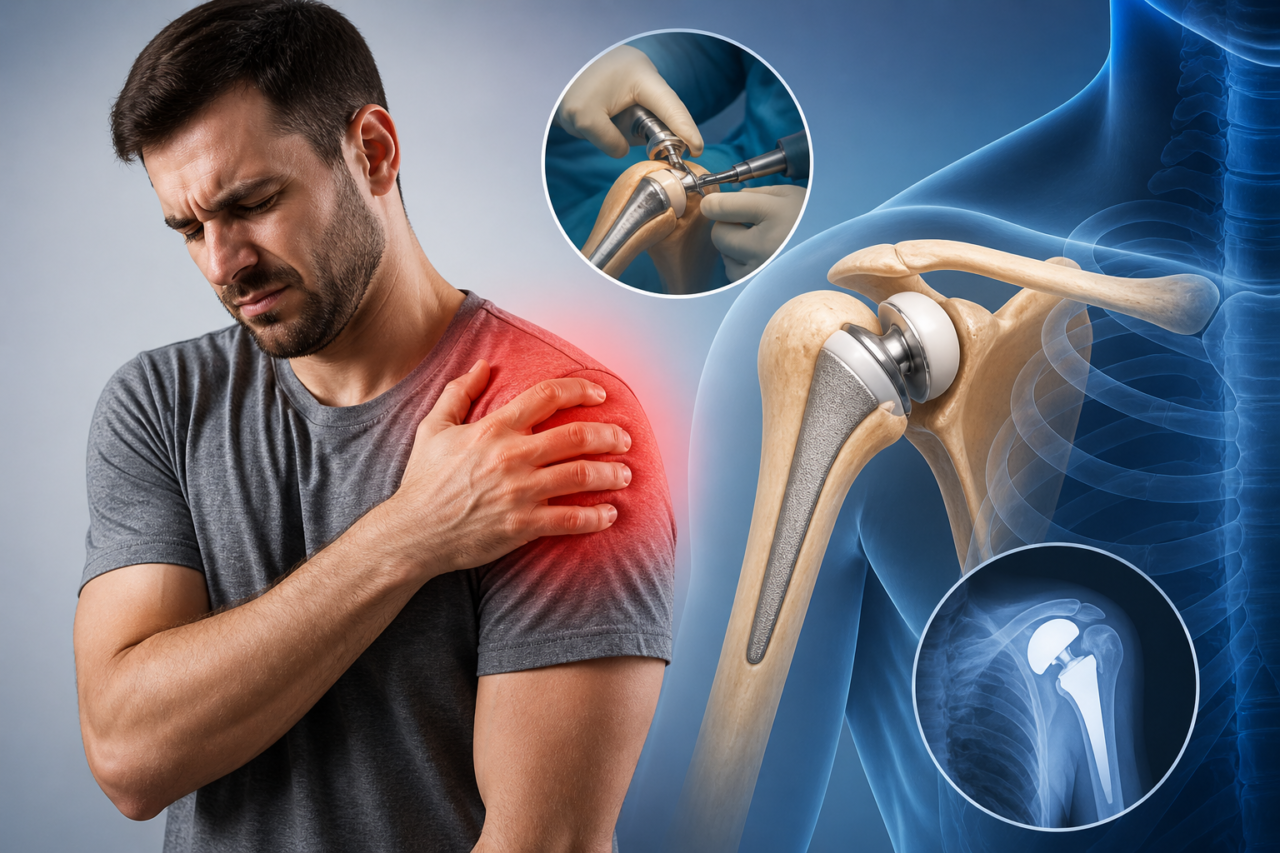
Shoulder pain is a common condition that affects millions of people worldwide. While many shoulder problems improve with physiotherapy, medications, or minimally invasive treatments, some conditions progress to a stage where shoulder replacement surgery becomes the most effective treatment.
Shoulder replacement surgery, also known as arthroplasty, involves replacing damaged parts of the shoulder joint with artificial implants to relieve pain and restore mobility. According to the American Academy of Orthopaedic Surgeons, more than 70,000 shoulder replacement surgeries are performed annually in the United States, and the number continues to grow as surgical techniques and implant technology improve.
Recent studies published in the Journal of Shoulder and Elbow Surgery indicate that over 90% of patients experience significant pain relief and improved shoulder function after surgery.
Understanding the warning signs early can help patients receive timely treatment and avoid long-term joint damage.
Understanding the Shoulder Joint
The shoulder is one of the most complex joints in the human body. It consists of:
- Humerus (upper arm bone)
- Scapula (shoulder blade)
- Clavicle (collarbone)
The shoulder functions as a ball-and-socket joint, allowing a wide range of movements such as lifting, rotating, and reaching.
Because of its flexibility, the shoulder is also vulnerable to degeneration, injury, and cartilage damage, which can eventually lead to severe arthritis or joint failure.
Conditions That May Require Shoulder Replacement
Several medical conditions can damage the shoulder joint to the point where replacement surgery becomes necessary.
1. Severe Shoulder Osteoarthritis
Osteoarthritis is the most common cause of shoulder replacement.
Research published in the National Institutes of Health shows that shoulder osteoarthritis affects nearly 32% of people over age 60.
Symptoms include:
- Gradual cartilage breakdown
- Bone-on-bone friction
- Chronic pain and stiffness
2. Rheumatoid Arthritis
Rheumatoid arthritis is an autoimmune condition that causes inflammation of the joint lining, damaging cartilage and bone over time.
Studies indicate that up to 90% of rheumatoid arthritis patients develop shoulder involvement during the disease course.
3. Rotator Cuff Tear Arthropathy
A massive rotator cuff tear can lead to severe shoulder arthritis.
This condition often requires Reverse Shoulder Replacement, a specialized surgical technique designed for patients with damaged rotator cuff muscles.
According to the American Shoulder and Elbow Surgeons, reverse shoulder replacement has increased by over 300% in the past decade due to its effectiveness.
4. Severe Shoulder Fractures
Complex fractures of the upper arm bone (proximal humerus) may require shoulder replacement if:
- The bone cannot heal properly
- Blood supply to the bone is disrupted
- Joint reconstruction is not possible
5. Avascular Necrosis
This condition occurs when blood supply to the shoulder bone is reduced, causing bone tissue to collapse.
It is often associated with:
- Long-term steroid use
- Trauma
- Certain medical conditions
Warning Signs You May Need Shoulder Replacement Surgery
Ignoring early symptoms can worsen joint damage and reduce treatment options.
1. Persistent Shoulder Pain
If shoulder pain continues for several months despite medication and physiotherapy, it may indicate severe joint damage.
Pain may worsen:
- During movement
- At night
- While lifting objects
2. Limited Shoulder Movement
Difficulty performing daily activities like:
- Reaching overhead
- Dressing
- Combing hair
- Lifting objects
may suggest advanced joint deterioration.
3. Shoulder Stiffness
Patients may experience progressive stiffness, making it difficult to rotate or move the arm.
4. Grinding or Clicking Sensation
A grinding sound (called crepitus) occurs when damaged cartilage causes bones to rub against each other.
5. Weakness in the Shoulder
Muscle weakness or instability can make the shoulder feel loose or unstable, especially in cases involving rotator cuff injuries.
Types of Shoulder Replacement Surgery
Modern surgical techniques allow surgeons to choose the most appropriate procedure depending on the condition of the joint.
1. Total Shoulder Replacement
Both the ball and socket of the shoulder joint are replaced with artificial implants.
This procedure is most commonly used for advanced osteoarthritis.
2. Partial Shoulder Replacement (Hemiarthroplasty)
Only the ball portion of the joint is replaced.
This is often recommended for fractures of the humeral head.
3. Reverse Shoulder Replacement
In this advanced procedure, the ball and socket positions are reversed to allow the deltoid muscle to move the arm instead of the damaged rotator cuff.
According to research in the Journal of Bone and Joint Surgery, reverse shoulder replacement provides excellent functional outcomes for patients with rotator cuff arthropathy.
Latest Research and Technological Advances (2026)
Modern shoulder replacement surgery has significantly improved due to advancements in implant design and surgical technology.
1. 3D Pre-Surgical Planning
Advanced imaging allows surgeons to create 3D models of the patient’s shoulder, improving implant positioning and surgical accuracy.
2. Patient-Specific Implants
Customized implants designed using 3D printing technology help match the patient’s anatomy more precisely.
3. Improved Implant Materials
Modern implants use:
- Titanium alloys
- Ceramic coatings
- Highly durable polyethylene components
These materials help improve implant longevity and joint function.
4. Minimally Invasive Surgical Techniques
Smaller incisions reduce:
- Blood loss
- Hospital stay
- Recovery time
Benefits of Shoulder Replacement Surgery
Patients undergoing shoulder replacement often experience significant improvements in quality of life.
Benefits include:
- Relief from chronic pain
- Improved shoulder mobility
- Better ability to perform daily activities
- Enhanced sleep quality
- Long-term joint stability
Research from the American Academy of Orthopaedic Surgeons shows that over 90–95% of patients report substantial improvement after shoulder replacement surgery.
Benefits of Shoulder Replacement Surgery
Patients undergoing shoulder replacement often experience significant improvements in quality of life.
Benefits include:
- Relief from chronic pain
- Improved shoulder mobility
- Better ability to perform daily activities
- Enhanced sleep quality
- Long-term joint stability
Research from the American Academy of Orthopaedic Surgeons shows that over 90–95% of patients report substantial improvement after shoulder replacement surgery.
Conclusion
Shoulder replacement surgery is a highly successful procedure that can restore mobility, relieve pain, and significantly improve quality of life for patients suffering from severe shoulder joint damage.
With modern surgical techniques, improved implant materials, and advanced imaging technology, outcomes continue to improve each year.
If you experience persistent shoulder pain, stiffness, or limited movement, seeking early evaluation from an orthopedic specialist can help prevent long-term joint deterioration and ensure the best possible recovery.