Advances in implant design and surgical technology are improving shoulder mobility and long-term outcomes.
Shoulder replacement surgery has undergone remarkable transformation over the last two decades. Modern orthopedic techniques, advanced imaging technologies, and improved implant materials have significantly enhanced patient outcomes, allowing individuals with severe shoulder damage to regain mobility and reduce pain.
Today, procedures such as anatomic total shoulder replacement and reverse shoulder arthroplasty are widely used to treat conditions like severe arthritis, rotator cuff tears, fractures, and degenerative joint disease. With ongoing research and innovation, surgeons are achieving better precision, faster recovery times, and longer implant lifespan.
This article explores the latest research, surgical techniques, implant innovations, and recovery outcomes in modern shoulder replacement surgery (2026).
Understanding Shoulder Replacement Surgery
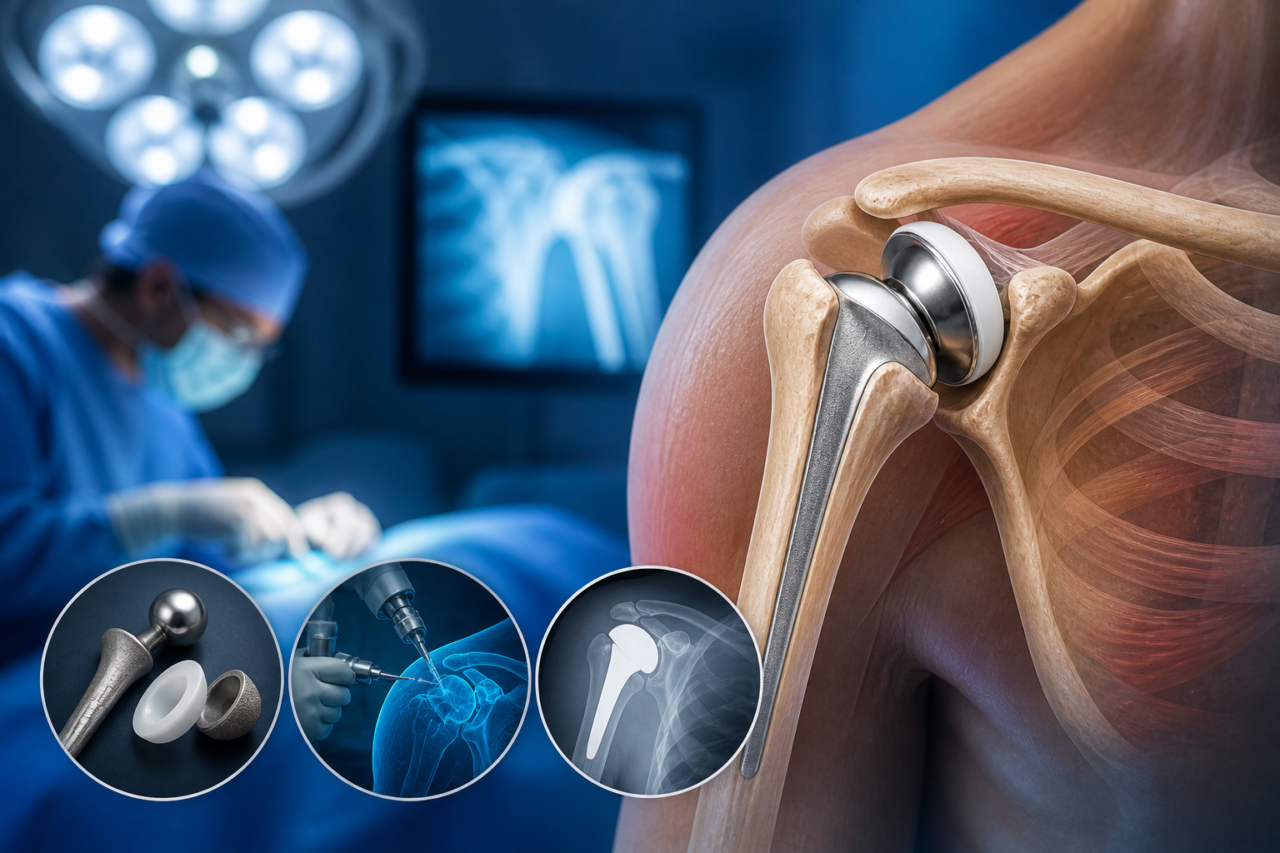
Shoulder replacement surgery involves replacing damaged parts of the shoulder joint with artificial components called prostheses.
The shoulder joint is a ball-and-socket joint consisting of:
- The humeral head (ball of the upper arm bone)
- The glenoid (socket of the shoulder blade)
During surgery, these damaged structures are replaced with artificial components made from metal alloys, ceramics, and medical-grade polyethylene.
The main goals of shoulder replacement are:
- Relieving chronic pain
- Restoring shoulder mobility
- Improving quality of life
- Enabling patients to perform daily activities again
Conditions That May Require Shoulder Replacement
Doctors may recommend shoulder replacement surgery for patients suffering from:
Severe Osteoarthritis
Progressive cartilage damage leads to pain and stiffness.
Rotator Cuff Tear Arthropathy
Large rotator cuff tears can cause joint instability and loss of movement.
Rheumatoid Arthritis
Chronic inflammation damages joint structures.
Complex Shoulder Fractures
Severe fractures in older adults often require joint replacement.
Failed Previous Shoulder Surgery
Revision shoulder replacement may be needed if earlier procedures fail.
Modern surgical techniques now allow surgeons to treat many of these conditions with greater precision and improved outcomes.
Latest Surgical Techniques in Shoulder Replacement
Advances in surgical technology have significantly improved the safety and effectiveness of shoulder replacement procedures.
1. Reverse Shoulder Arthroplasty (RSA)
Reverse shoulder replacement is one of the most significant innovations in orthopedic surgery.
In this procedure:
- The ball and socket positions are reversed
- The socket is attached to the arm bone
- The ball is attached to the shoulder blade
This design allows the deltoid muscle to compensate for a damaged rotator cuff.
Reverse shoulder arthroplasty is especially effective for:
- Massive rotator cuff tears
- Complex fractures
- Failed previous shoulder replacements
Recent research shows that reverse shoulder replacement has implant survival rates of around 91% at 10 years, demonstrating strong long-term outcomes.
Additionally, modern designs have improved rotation and reduced complications such as scapular notching compared to early implant models.
2. Stemless Shoulder Implants
Traditional shoulder implants use long stems inserted into the humerus bone.
Modern stemless implants offer several advantages:
- Preserve more natural bone
- Allow easier revision surgery if needed
- Reduce implant-related complications
Long-term clinical studies show that stemless implants provide comparable functional outcomes and survivorship to conventional implants.
3. 3D Pre-Surgical Planning and Navigation
Digital surgical planning tools now allow surgeons to analyze the shoulder joint in three-dimensional imaging before surgery.
This technology enables:
- Accurate implant sizing
- Precise implant positioning
- Reduced surgical complications
Hospitals are increasingly adopting virtual implant positioning (VIP) technology, which helps surgeons plan procedures and improve postoperative mobility.
4. Minimally Invasive Shoulder Replacement
Minimally invasive surgical techniques are becoming increasingly common.
Benefits include:
- Smaller incisions
- Less muscle damage
- Reduced blood loss
- Faster recovery
These techniques are particularly helpful for younger or active patients seeking quicker rehabilitation.
Innovations in Shoulder Implant Design
Modern shoulder implants are designed to improve durability, mobility, and joint stability.
Key innovations include:
Improved Implant Geometry
New designs better replicate the natural anatomy of the shoulder joint.
Advanced Materials
Modern implants use:
- Titanium alloys
- Ceramic coatings
- Highly cross-linked polyethylene
These materials reduce wear and extend implant lifespan.
Lateralized Glenoid Components
Recent studies evaluating over 2,300 shoulder replacement cases have shown that modern glenoid component designs help improve joint stability and movement.
Success Rates and Long-Term Outcomes
Shoulder replacement surgery is considered one of the most successful orthopedic procedures.
Recent research shows:
- Implant survival rates exceeding 90% after 10 years in many patients
- Significant improvement in pain levels and shoulder function after surgery
- Long-term studies demonstrating durable fixation and improved mobility with modern implant designs
Patients often experience dramatic improvements in daily activities such as:
- Lifting the arm overhead
- Reaching behind the back
- Dressing and grooming
The Future of Shoulder Replacement Surgery
The future of shoulder replacement is being shaped by exciting technological innovations such as:
Robotic-Assisted Surgery
Improves surgical precision and implant alignment.
3D-Printed Custom Implants
Allows personalized implants tailored to individual anatomy.
Smart Implants
Sensors embedded in implants may help monitor joint performance.
AI-Guided Surgical Planning
Artificial intelligence could help predict surgical outcomes and optimize treatment plans.
These innovations aim to further improve implant longevity, mobility, and patient satisfaction.
Conclusion
Modern shoulder replacement surgery has evolved dramatically thanks to advances in implant design, surgical techniques, and digital planning technologies.
Procedures such as reverse shoulder arthroplasty, stemless implants, and minimally invasive techniques are helping patients regain mobility, reduce pain, and return to active lifestyles.
With implant survival rates exceeding 90% after 10 years and ongoing technological breakthroughs, shoulder replacement surgery continues to deliver excellent outcomes for patients suffering from severe shoulder joint damage.