
ACL, Meniscus and Ligament Injuries in Athletes
Understanding the Most Common Knee Injuries and Their Treatments
Knee injuries are among the most frequent problems faced by athletes in both professional and recreational sports. Activities that involve running, jumping, sudden direction changes, and physical contact place significant stress on the knee joint. Among the most common sports-related knee injuries are Anterior Cruciate Ligament (ACL) tears, meniscus injuries, and collateral ligament injuries.
These injuries can significantly affect athletic performance and may require long rehabilitation periods. Advances in sports medicine, surgical techniques, and rehabilitation programs have greatly improved outcomes, allowing many athletes to safely return to sports.
Understanding the Knee Joint
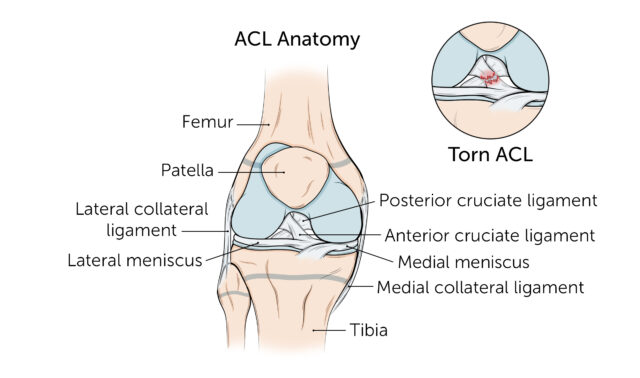
The knee is one of the largest and most complex joints in the human body. It connects the femur (thigh bone), tibia (shin bone), and patella (kneecap) and is stabilized by several ligaments and cartilage structures.
Key structures in the knee include:
1. Ligaments
- ACL (Anterior Cruciate Ligament)
- PCL (Posterior Cruciate Ligament)
- MCL (Medial Collateral Ligament)
- LCL (Lateral Collateral Ligament)
2. Meniscus
- Medial meniscus
- Lateral meniscus
These structures work together to stabilize the knee, absorb shock, and enable smooth movement during physical activities.
ACL Injuries in Athletes
What is an ACL Injury?
The Anterior Cruciate Ligament (ACL) is one of the most important ligaments in the knee. It connects the femur to the tibia and helps prevent excessive forward movement and rotation of the knee.
ACL injuries often occur during sports that involve:
- Sudden stopping
- Rapid direction changes
- Jumping and landing
- Pivoting movements
Sports with high ACL injury risk include football, basketball, soccer, volleyball, skiing, and gymnastics.
Research and Statistics
Research shows that ACL injuries are common among athletes. A large systematic review found that the incidence proportion of ACL injuries is about 3.5% in female athletes and about 2.0% in male athletes, with females having a significantly higher risk in many sports.
Another study analyzing professional football players reported an average seasonal ACL injury risk of about 1.9% among athletes, highlighting how frequent this injury is in competitive sports.
Additionally, studies indicate that ACL injuries are particularly common in sports requiring cutting, pivoting, and high-impact movements, such as basketball and soccer.
Symptoms of ACL Injury
Athletes who suffer an ACL tear often experience:
- A popping sound at the time of injury
- Immediate knee swelling
- Severe pain
- Knee instability or “giving way”
- Difficulty walking or bearing weight
Surgical Treatment
Athletes with complete ACL tears often require ACL reconstruction surgery, where the damaged ligament is replaced with a tendon graft. Rehabilitation after surgery typically lasts 6–12 months before returning to competitive sports.