

Partial Hip Replacement, medically known as hemiarthroplasty, is a surgical procedure in which only the damaged femoral head (the ball of the hip joint) is replaced with an artificial implant, while the natural acetabulum (hip socket) remains intact.
This procedure is commonly performed when the ball portion of the hip joint is severely damaged, but the socket is still healthy. It is frequently recommended for hip fractures in elderly patients, especially fractures of the femoral neck.
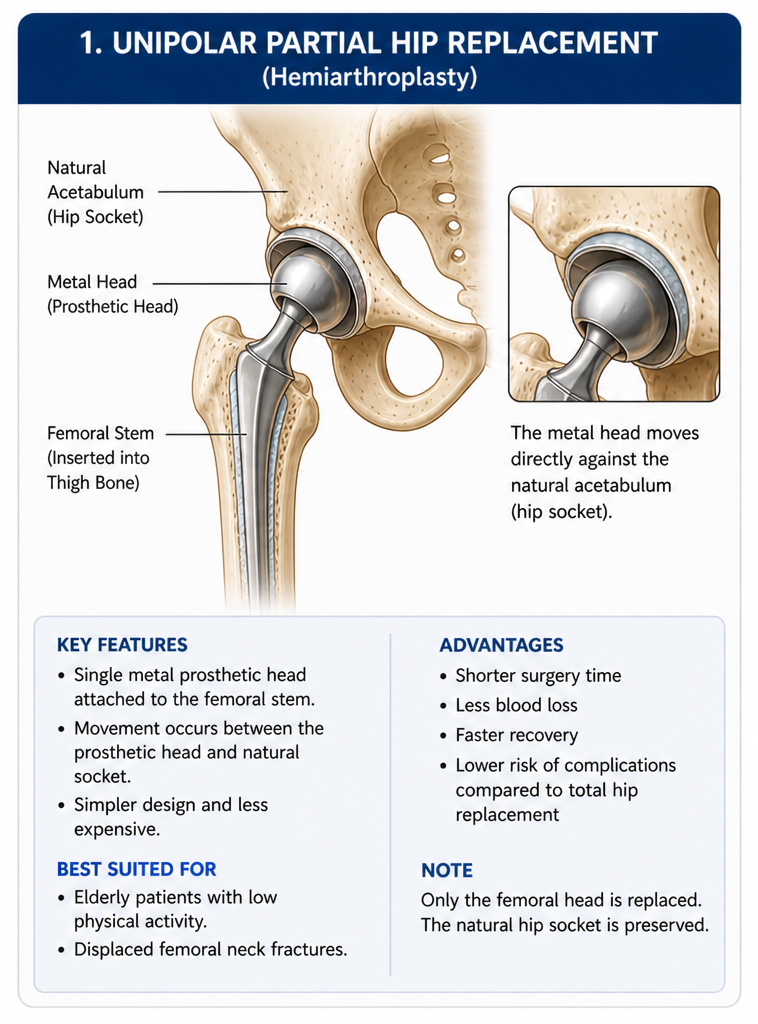
In this procedure, the artificial femoral head moves directly against the natural acetabulum (hip socket).
Key Features
Best Used For
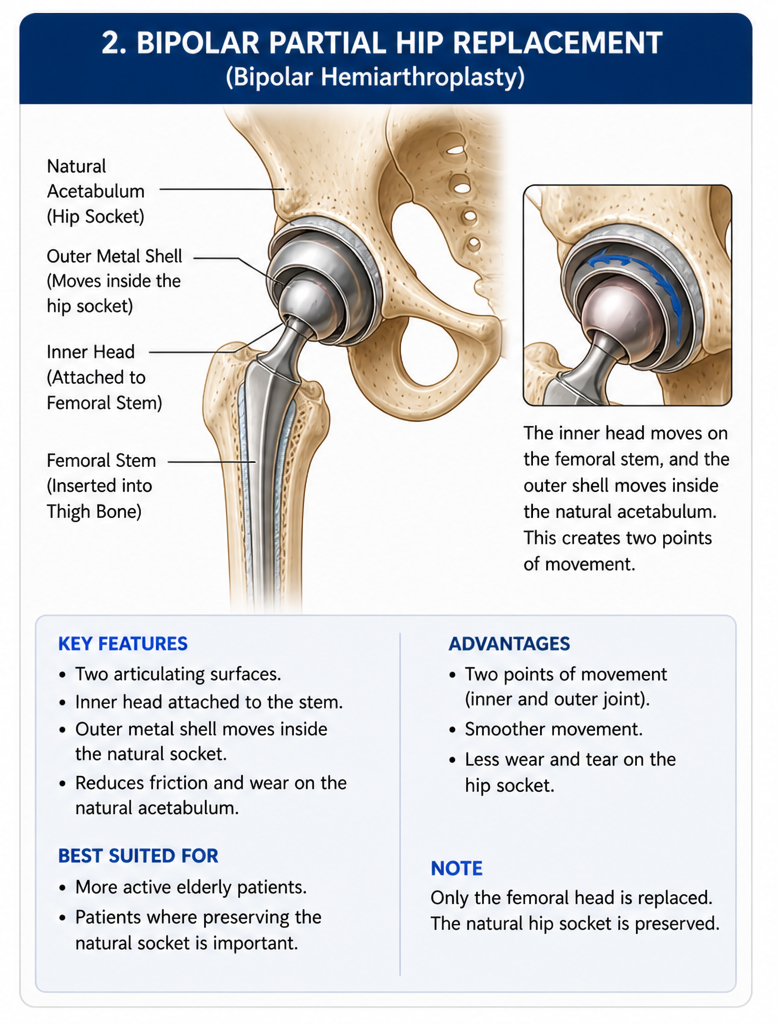
In bipolar hemiarthroplasty, the prosthesis has two articulating surfaces.
Structure
Key Features
Best Used For
Doctors may recommend this surgery in conditions such as:
Patients may require partial hip replacement if they experience:
Orthopedic specialists diagnose hip joint damage using:
These tests help determine whether partial or total hip replacement is more appropriate.
Although uncommon, risks may include:
Modern orthopedic surgery uses:
These advances help improve implant longevity, mobility, and patient outcomes.