

Total Hip Replacement is a surgical procedure in which a damaged or diseased hip joint is replaced with an artificial joint (prosthesis). The hip joint is a ball-and-socket joint, where the head of the femur (thigh bone) fits into the acetabulum (hip socket of the pelvis). When this joint becomes severely damaged due to arthritis, injury, or degeneration, the surgeon removes the damaged bone and cartilage and replaces them with artificial components made of metal, ceramic, or durable plastic.
This surgery helps relieve pain, restore mobility, and improve the quality of life in patients with severe hip joint problems.
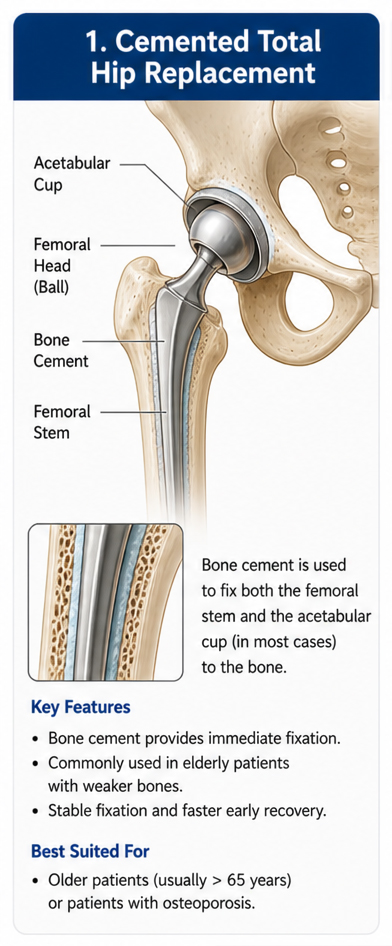
In this procedure, a special surgical bone cement is used to fix the artificial joint components to the bone.
Features
Advantages
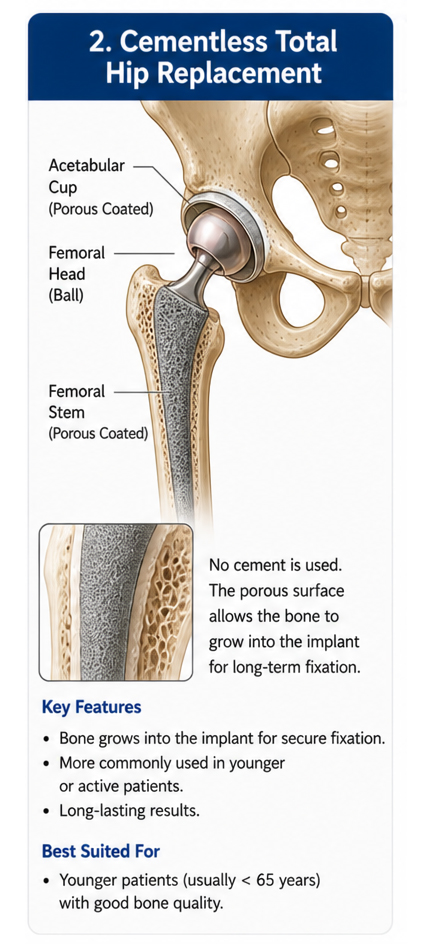
In this technique, the prosthesis is designed with a porous surface that allows the patient’s bone to grow into it naturally.
Features
Advantages
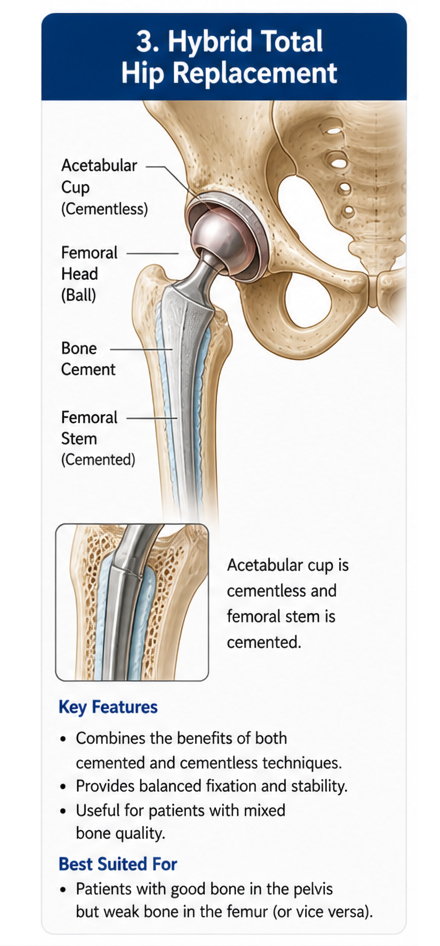
This method combines both techniques.
Features
Example:
Advantages
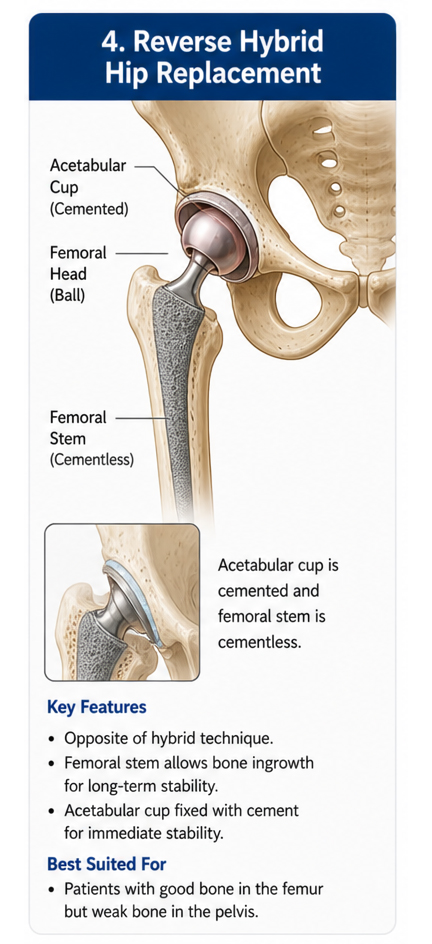
This is the opposite of hybrid replacement.
Features
Used in selected clinical situations depending on bone structure.
A total hip prosthesis generally has four parts:
Common materials include:
Doctors may recommend this surgery when conservative treatments fail for conditions such as:
Patients may experience:
Doctors use several methods to confirm the need for hip replacement: