

Total Knee Replacement is a surgical procedure in which a damaged or worn-out knee joint is replaced with an artificial implant (prosthesis). The surgery is commonly performed to relieve severe pain, restore joint function, and improve mobility in patients whose knee joints are severely affected by conditions such as Osteoarthritis, Rheumatoid Arthritis, or Post‑Traumatic Arthritis.
During the procedure, the damaged cartilage and bone from the femur (thigh bone), tibia (shin bone), and sometimes the patella (kneecap) are removed and replaced with specially designed metal and plastic components that mimic the natural knee joint.
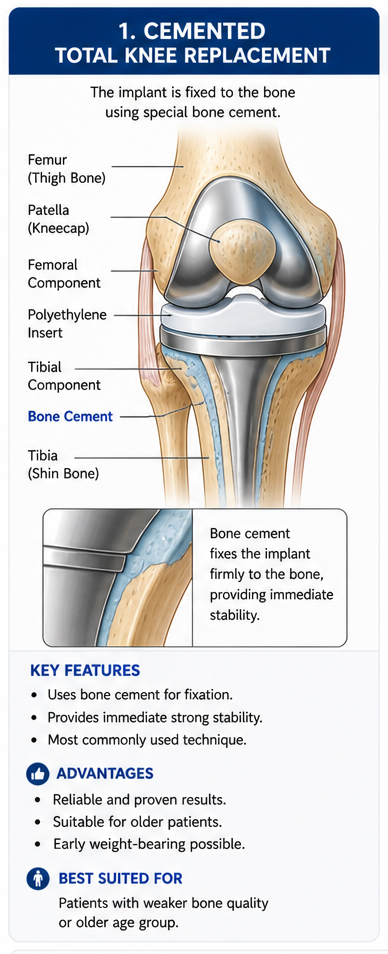
In this technique, a special surgical bone cement is used to fix the artificial implant firmly to the bone.
Key Features
Advantages
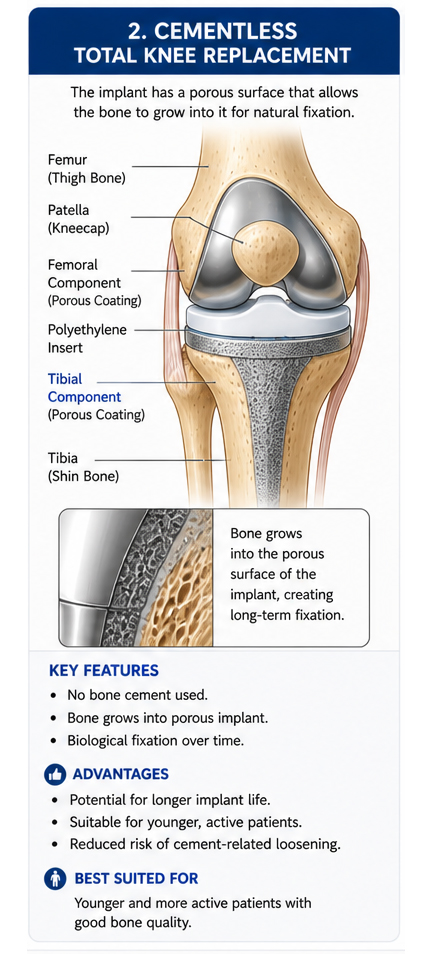
In cementless replacement, the implant is designed with a porous surface that allows the patient’s bone to grow into the implant, creating natural fixation.
Key Features
Advantages
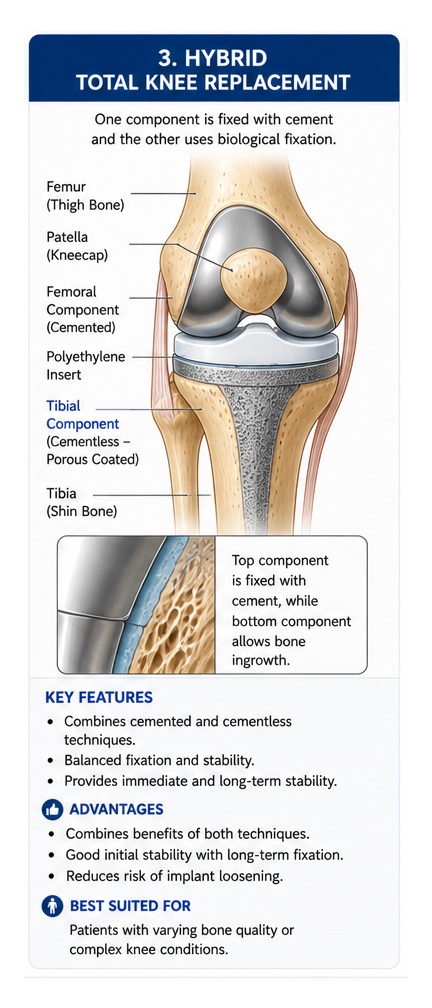
Hybrid knee replacement combines both cemented and cementless techniques.
Key Features
Advantages
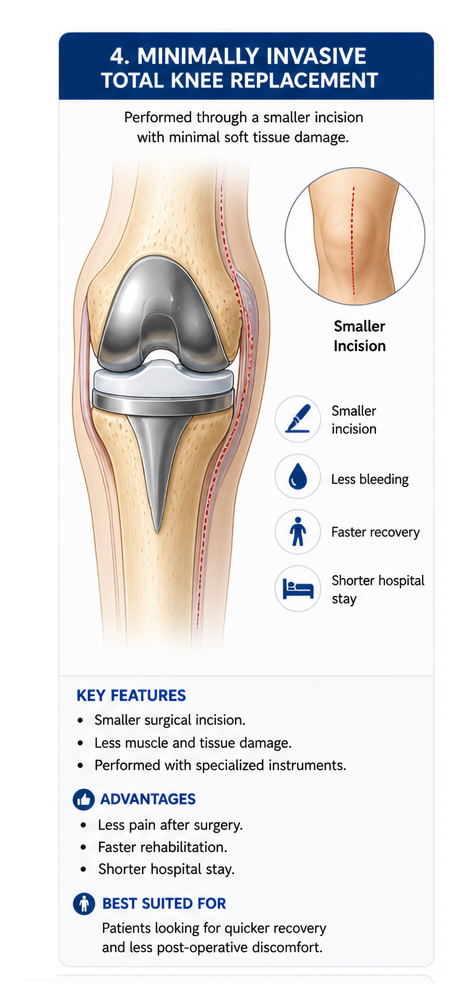
This approach uses smaller surgical incisions and specialized instruments to perform the knee replacement.
Key Features
Advantages
Patients may need knee replacement when conservative treatments fail.
Common conditions include:
Advancements in orthopedic surgery have improved surgical outcomes.
Modern techniques include:
These technologies help surgeons achieve better accuracy, alignment, and implant longevity.
You should consult an orthopedic specialist if you experience:
Early evaluation and treatment can prevent further joint damage and improve surgical outcomes.