A SLAP Tear (Superior Labrum Anterior to Posterior tear) is a type of shoulder injury that affects the Glenoid Labrum, a ring of cartilage surrounding the shoulder socket. The tear occurs at the top (superior) part of the labrum, where the Biceps Tendon attaches.
The labrum helps stabilize the shoulder joint by deepening the socket of the Scapula and keeping the head of the Humerus securely in place.
A SLAP tear can lead to shoulder pain, instability, weakness, and limited range of motion, especially during overhead activities.
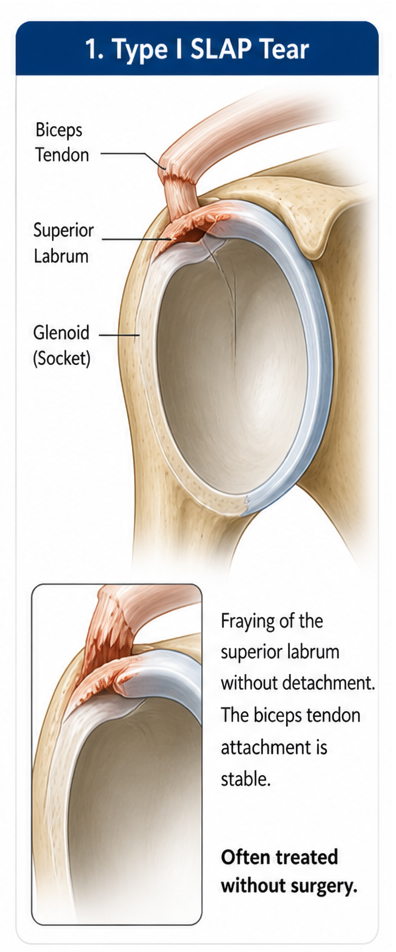
A Type I SLAP Tear involves fraying of the superior labrum without detachment.
Characteristics
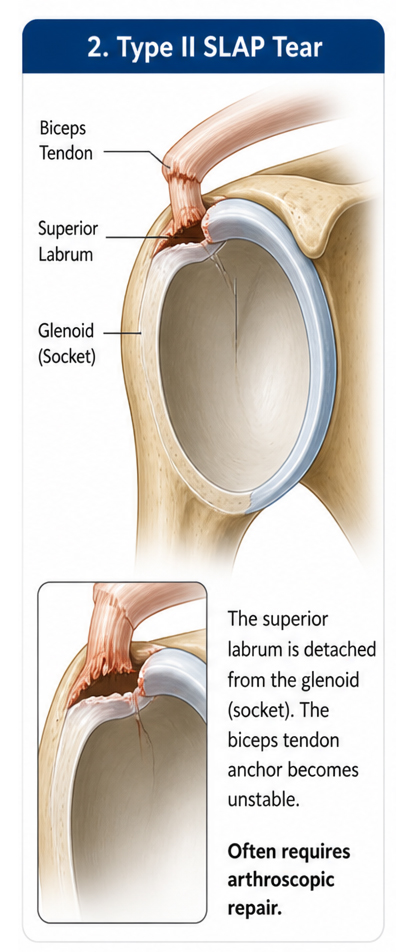
A Type II SLAP Tear is the most common type of SLAP injury.
Characteristics
Treatment
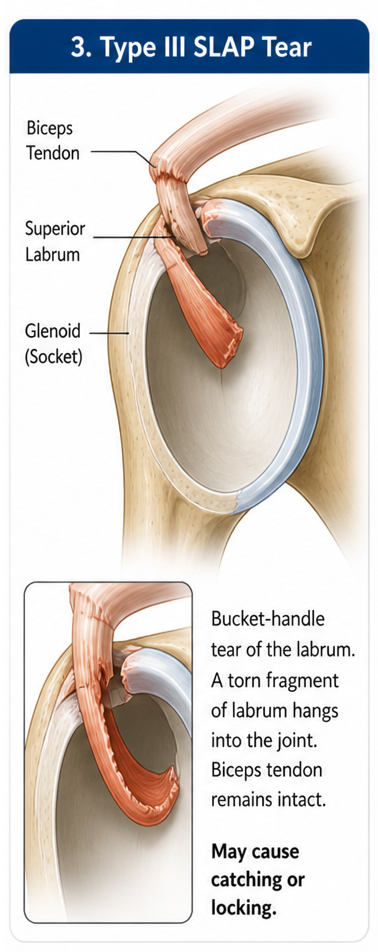
A Type III SLAP Tear involves a bucket-handle tear of the labrum.
Characteristics
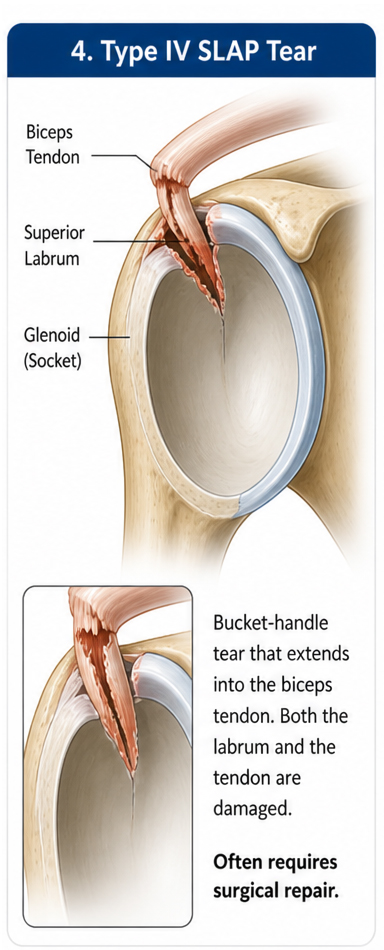
A Type IV SLAP Tear is a more severe injury.
Characteristics
SLAP tears can occur due to trauma or repetitive shoulder use.
As people age, the labrum becomes weaker and more prone to tearing.
Patients with a SLAP tear may experience:
Doctors diagnose SLAP tears using clinical examination and imaging tests.
Orthopedic specialists perform tests such as:
These help evaluate labral injury and shoulder stability.
Surgery may be recommended when symptoms persist.
1. Arthroscopic Labral Repair
The torn labrum is reattached to the bone using anchors.
2. Biceps Tenodesis
The biceps tendon is reattached to a different location to relieve stress on the labrum.
3. Labral Debridement
Damaged tissue is trimmed to smooth the joint surface.
If a SLAP tear is not treated properly, it may lead to:
To reduce the risk of SLAP tears:
A SLAP tear is an injury to the superior portion of the shoulder labrum where the biceps tendon attaches. It is commonly seen in athletes and individuals performing repetitive overhead activities. Early diagnosis and appropriate treatment help restore shoulder stability and function.