

A Multiligament Knee Injury (MLKI) occurs when two or more of the major ligaments of the knee joint are torn or severely damaged at the same time. The knee joint is stabilized by four primary ligaments:
When more than one of these ligaments is injured simultaneously, the knee becomes unstable and unable to properly support body weight or movement. These injuries are often associated with high-energy trauma such as road traffic accidents, sports collisions, or severe falls.
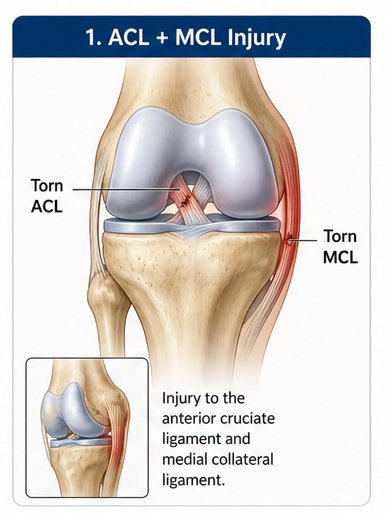
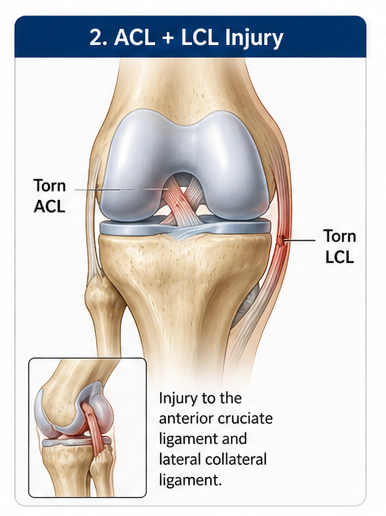
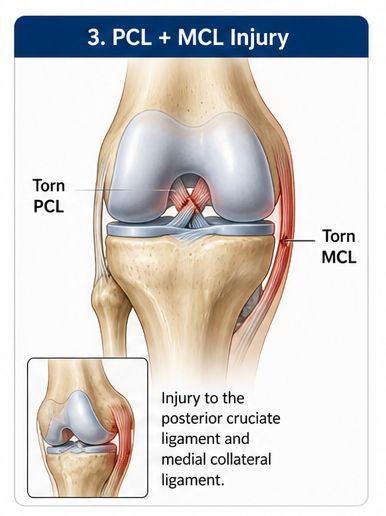
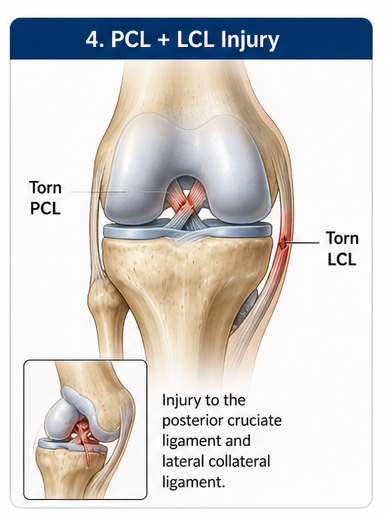
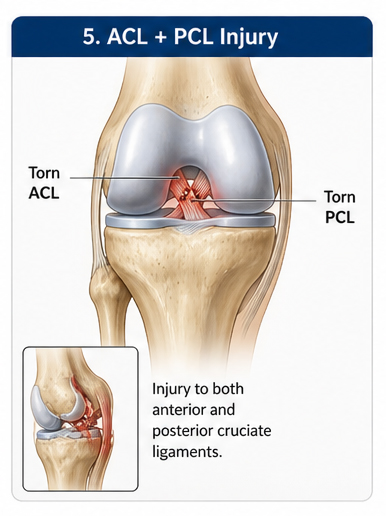
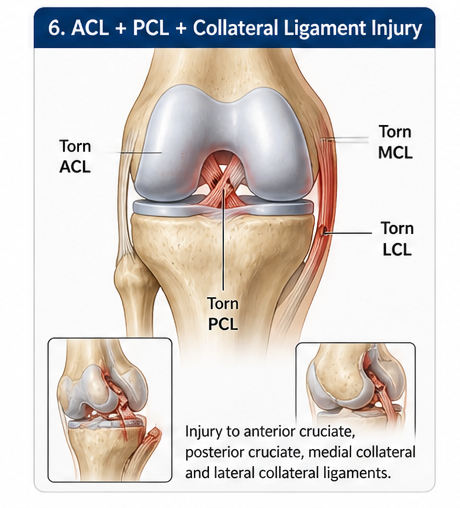
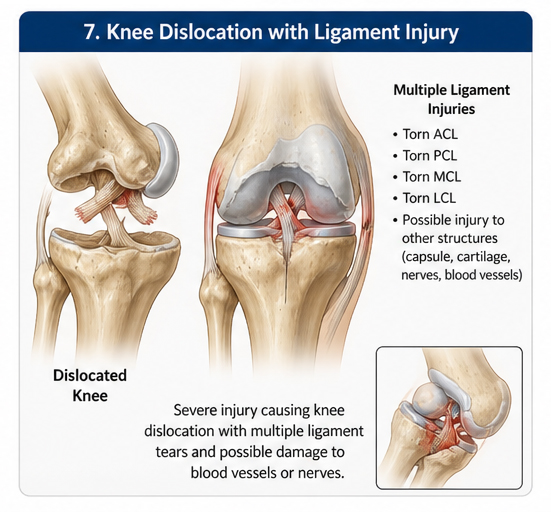
Orthopedic surgeons commonly classify MLKIs based on the combination of ligaments involved.
Common causes include:
Patients with MLKI may experience:
In some cases, vascular or nerve injury may cause:
Orthopedic specialists diagnose MLKI using:
Tests for ligament stability and knee alignment.
Damaged ligaments are replaced with grafts.
Common graft types:
This is the most common surgical treatment for MLKI.
Multiple ligaments are reconstructed in a single surgical procedure.
Example:
Sometimes surgery is done in multiple stages:
Stage 1:
Stage 2:
Minimally invasive technique using a small camera (arthroscope) to repair or reconstruct ligaments.
Benefits:
Untreated MLKI may lead to:
Consult an orthopedic specialist immediately if:
Early diagnosis and treatment significantly improve outcomes.