Meniscus

The meniscus is a C-shaped piece of cartilage in the knee joint that acts as a cushion between the thigh bone (Femur) and the shin bone (Tibia).

Each knee has two menisci that help absorb shock, stabilize the joint, and distribute body weight evenly across the knee. Without the meniscus, the bones would rub directly against each other, leading to pain and joint damage.

What is a Meniscus?

The meniscus is a C-shaped piece of cartilage in the knee joint that acts as a cushion between the thigh bone (Femur) and the shin bone (Tibia).

Each knee has two menisci that help absorb shock, stabilize the joint, and distribute body weight evenly across the knee. Without the meniscus, the bones would rub directly against each other, leading to pain and joint damage.

Menisci are made of fibrocartilage, which is strong yet flexible, allowing the knee to move smoothly during walking, running, and jumping.
Types of Meniscus

  • Medial Meniscus
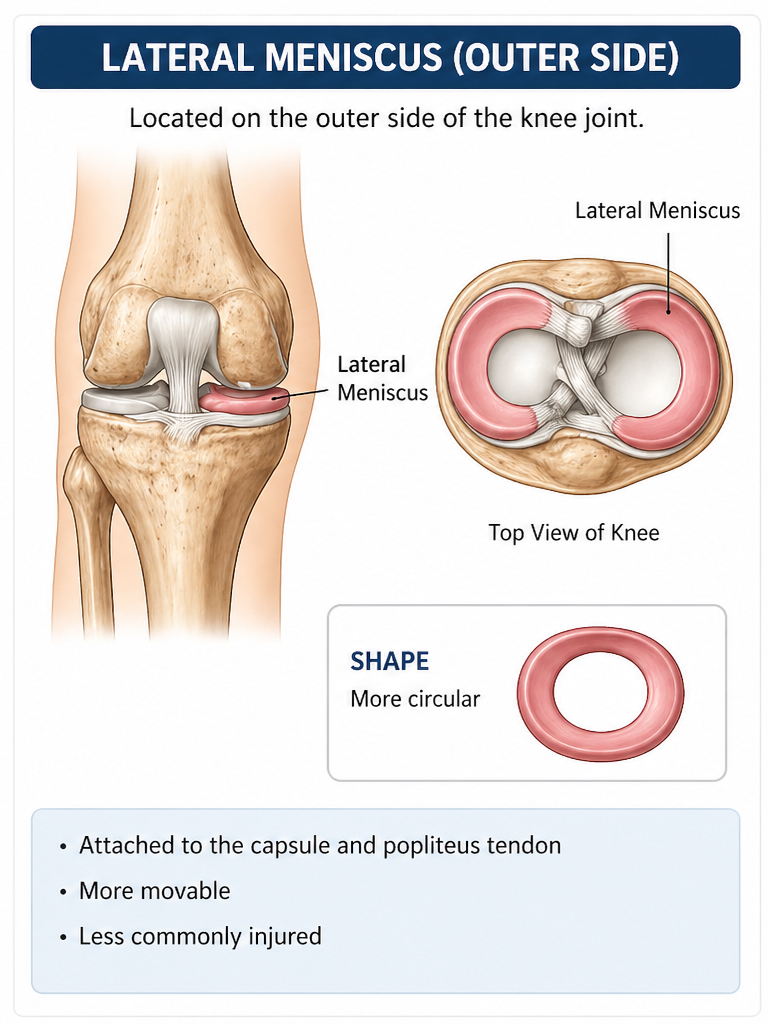
  • Lateral Meniscus
https://drpraneetorthogoa.com/wp-content/uploads/2026/04/Medial.jpg
https://drpraneetorthogoa.com/wp-content/uploads/2026/04/Lateral-Meniscus.jpg

Each knee has two types of meniscus:

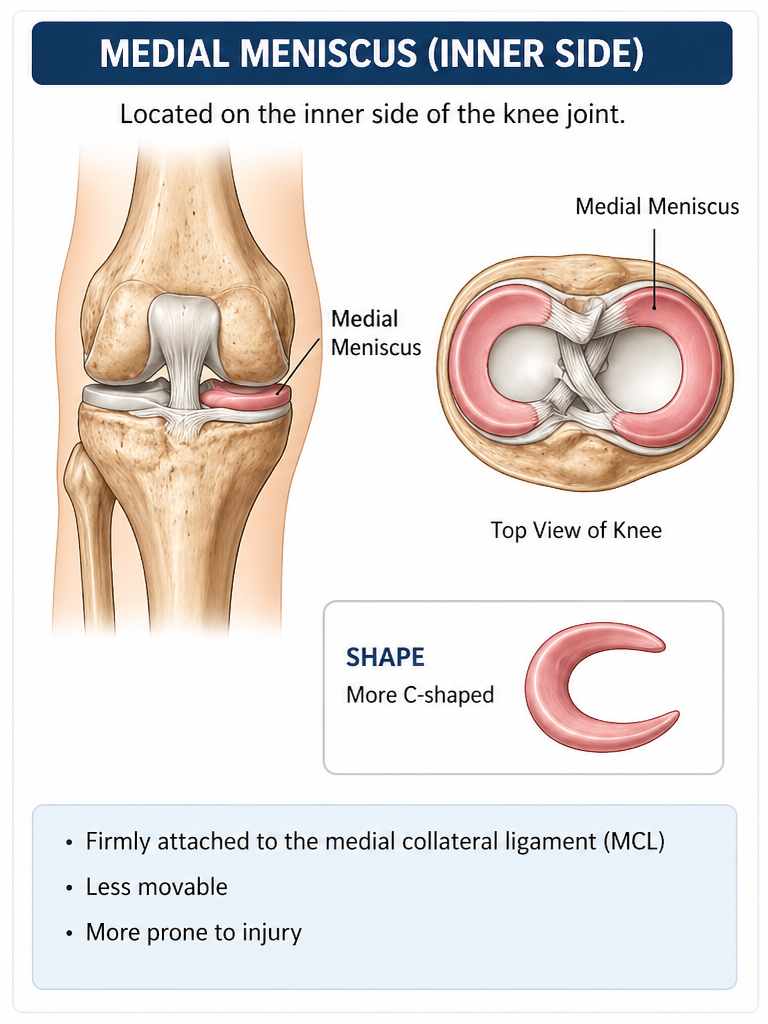
1. Medial Meniscus

  • Located on the inner side of the knee.
  • Attached firmly to the joint capsule and medial ligament.
  • Less mobile, so it is more prone to injury.
  • Commonly torn during twisting movements of the knee.

2. Lateral Meniscus

  • Located on the outer side of the knee.
  • More circular and flexible compared to the medial meniscus.
  • More mobile, so injuries are less common than medial meniscus tears.
Functions of the Meniscus

The meniscus performs several important roles in knee health:

  • Shock absorption – Reduces pressure between the femur and tibia.
  • Load distribution – Spreads body weight evenly across the knee joint.
  • Joint stability – Helps stabilize the knee during walking, running, and twisting.
  • Lubrication and nutrition – Helps distribute synovial fluid within the knee.
  • Protection of cartilage – Prevents early wear of joint cartilage and reduces risk of osteoarthritis.
Common Types of Meniscus Tears

Meniscus injuries may occur due to sports activities, sudden twisting, trauma, or age-related degeneration.

1. Longitudinal (Vertical) Tear

A tear running along the length of the meniscus.

2. Bucket Handle Tear

A severe form of longitudinal tear where a portion of the meniscus flips into the joint.

3. Radial Tear

Starts from the inner edge and extends outward.

4. Horizontal Tear

Splits the meniscus into upper and lower parts.

5. Complex Tear

Combination of multiple tear patterns, usually seen in older patients.

6. Degenerative Tear

Occurs due to age-related wear and tear of the meniscus.

Symptoms of Meniscus Injury

Common symptoms include:

  • Knee pain
  • Swelling in the knee
  • Stiffness or limited range of motion
  • Locking or catching sensation in the knee
  • Difficulty straightening the knee
  • Feeling that the knee may “give way”
Diagnosis

Orthopedic specialists diagnose meniscus injuries through:

  • Physical examination
  • MRI Scan – most accurate imaging method
  • X-ray – used to rule out bone injuries
  • Arthroscopy – minimally invasive procedure to view the inside of the knee
Surgical Treatment Options

If symptoms persist or the tear is severe, surgery may be required.

1. Arthroscopic Meniscus Repair

  • The torn meniscus is stitched back together.
  • Performed using Knee Arthroscopy.
  • Preserves the natural meniscus.

2. Partial Meniscectomy

  • Only the damaged portion of the meniscus is removed.
  • The healthy tissue is preserved.

3. Total Meniscectomy

  • The entire meniscus is removed (rarely performed today).
  • Usually avoided because it increases the risk of Knee Osteoarthritis.

4. Meniscus Transplant

  • A donor meniscus is transplanted in younger patients who lost their meniscus due to severe injury.
When Should You See an Orthopedic Surgeon?

Consult an orthopedic specialist if you experience:

  • Persistent knee pain after injury
  • Swelling lasting more than a few days
  • Knee locking or instability
  • Difficulty walking or bending the knee
  • Pain during sports or daily activities
Summary

The meniscus is an essential cartilage structure in the knee that acts as a shock absorber and stabilizer. Injuries can occur due to trauma, sports, or aging. Early diagnosis and proper treatment—whether conservative care or minimally invasive surgery—can help restore knee function and prevent long-term joint damage.