
The Anterior Cruciate Ligament (ACL) is one of the four major ligaments of the knee joint that connects the thigh bone (femur) to the shin bone (tibia). It plays a crucial role in stabilizing the knee, especially during activities that involve running, jumping, sudden stopping, or changing direction.
The ACL prevents the tibia from sliding forward in relation to the femur and provides rotational stability to the knee joint. Because of the high stress placed on the knee during sports, ACL injuries are among the most common ligament injuries in athletes.
Sports that frequently cause ACL injuries include:
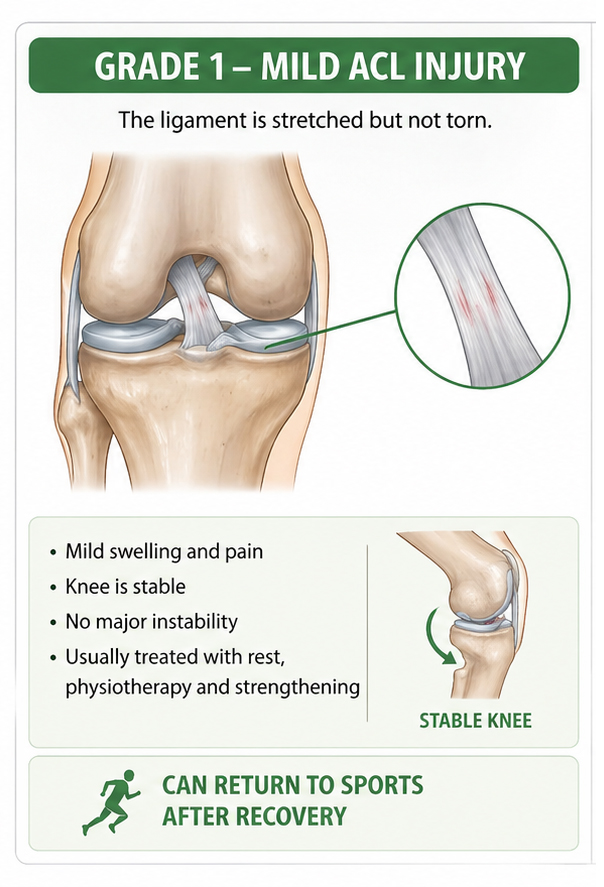
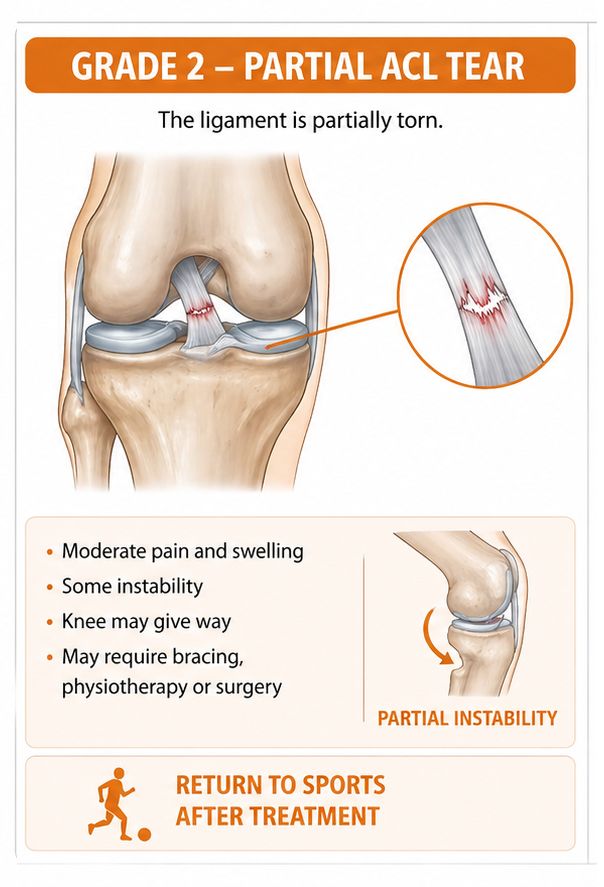
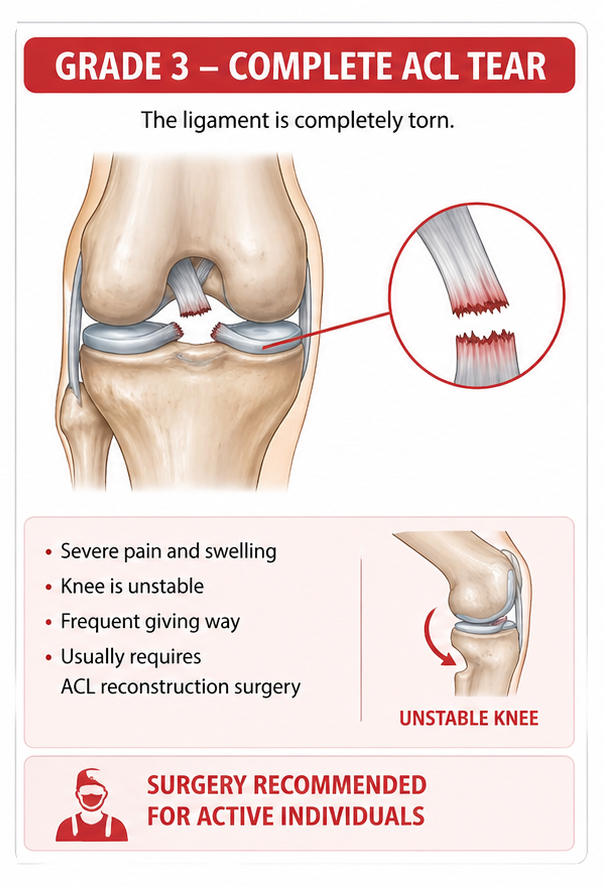
ACL injuries are generally classified based on severity and ligament damage.
Common symptoms include:
Athletes often cannot continue playing after the injury.
An orthopedic surgeon will diagnose ACL injuries through:
Common tests include:
These tests check knee stability and ligament integrity.
X-ray
MRI (Magnetic Resonance Imaging)
When the ACL is completely torn, especially in young or active individuals, surgery is often recommended.
Instead of repairing the torn ligament, surgeons usually replace it with a graft.
Common graft options include:
Modern orthopedic surgery uses minimally invasive arthroscopic techniques.
Benefits include:
During surgery:
Consult an orthopedic specialist if you experience:
Early diagnosis can help prevent long-term joint damage and arthritis.