Shoulder Replacement Surgery is a medical procedure in which damaged parts of the shoulder joint are replaced with artificial components called prostheses. The shoulder is a ball-and-socket joint where the head of the upper arm bone (humerus) fits into a shallow socket in the shoulder blade (glenoid).
When the joint becomes severely damaged due to arthritis, injury, or degeneration, patients may experience chronic pain, stiffness, and reduced arm movement. In such cases, shoulder replacement surgery may be recommended to restore mobility and relieve pain.
This procedure is commonly performed in the field of Orthopedic Surgery and has helped many patients regain normal shoulder function and improve quality of life.
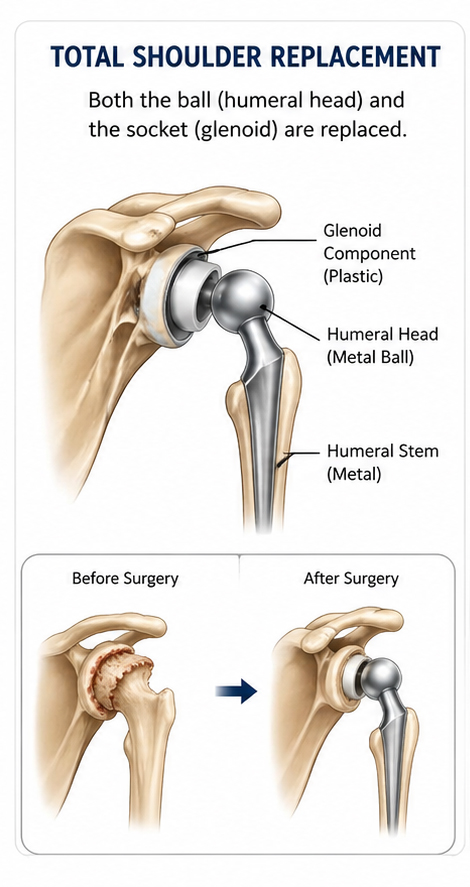
Total Shoulder Replacement involves replacing both parts of the shoulder joint:
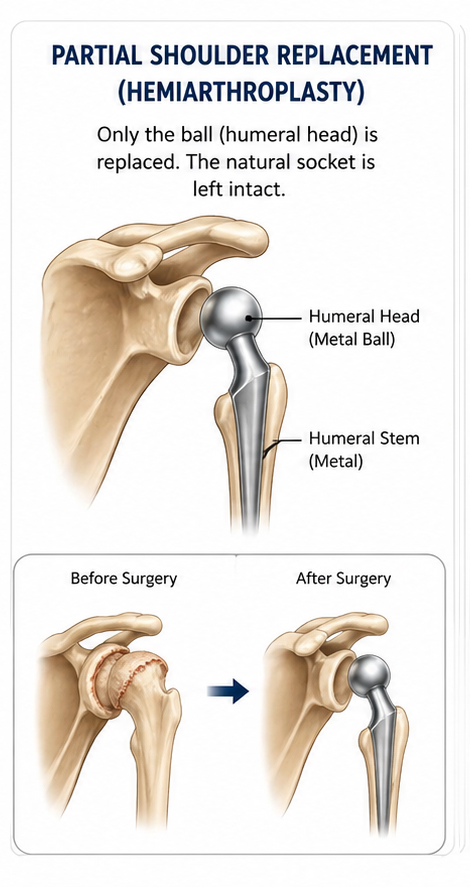
Shoulder Hemiarthroplasty replaces only the ball portion of the shoulder joint, while the natural socket is preserved.
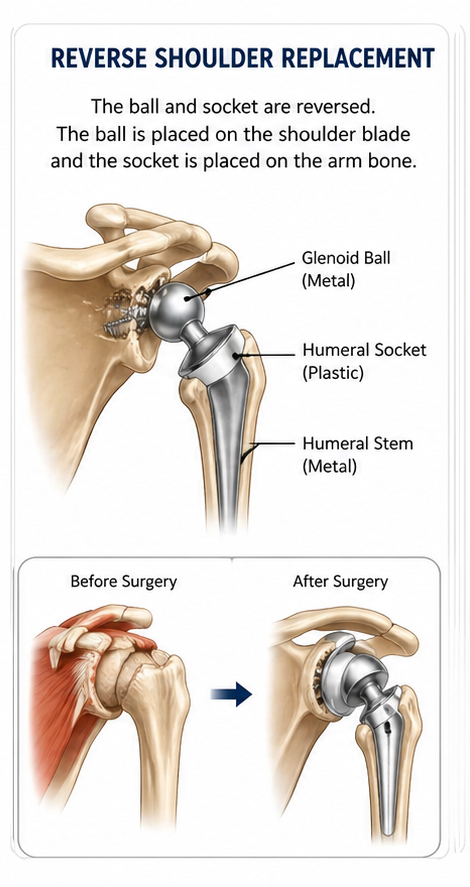
Reverse Shoulder Replacement is a specialized procedure where the normal ball-and-socket structure is reversed.
This procedure allows the deltoid muscle to compensate for a damaged rotator cuff.
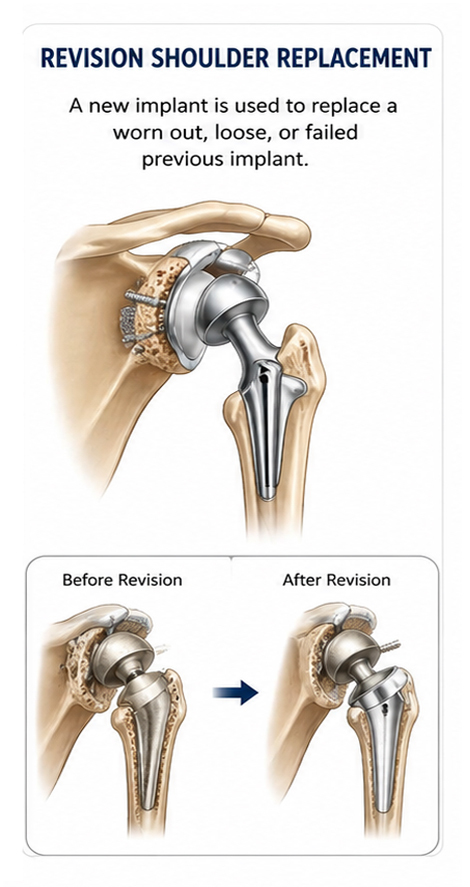
Revision Shoulder Replacement is performed when a previous shoulder replacement fails or develops complications.
The surgeon removes the old prosthesis and replaces it with a new one.
Shoulder replacement is typically recommended for severe joint damage caused by:
You should consult an orthopedic specialist if you experience:
Early evaluation helps determine the best treatment approach.
Modern surgical techniques aim to minimize tissue damage and improve recovery time.
Modern orthopedic centers use advanced technologies to improve surgical outcomes.
These innovations help achieve better implant alignment, reduced pain, and faster recovery.
Most shoulder implants last 15–20 years, depending on patient activity level and implant type.
Yes. Shoulder replacement is considered a safe and effective orthopedic procedure with high success rates.
You should consult a specialist if shoulder pain persists for several weeks, worsens with movement, or does not improve with medication or physiotherapy.