
Hip Replacement

Hip Replacement Surgery is a medical procedure in which a damaged or diseased hip joint is replaced with an artificial implant (prosthesis).

The hip joint is a ball-and-socket joint, where the head of the femur (thigh bone) fits into the acetabulum (hip socket).

What is Hip Replacement?

Hip Replacement Surgery is a medical procedure in which a damaged or diseased hip joint is replaced with an artificial implant (prosthesis). The hip joint is a ball-and-socket joint, where the head of the femur (thigh bone) fits into the acetabulum (hip socket).

When the cartilage protecting the joint wears out due to disease or injury, bones rub against each other, causing severe pain, stiffness, and difficulty walking. In such cases, doctors may recommend hip replacement surgery.

One of the most commonly performed procedures in Orthopedic Surgery, hip replacement significantly improves mobility, reduces pain, and restores quality of life.
Types of Hip Replacement

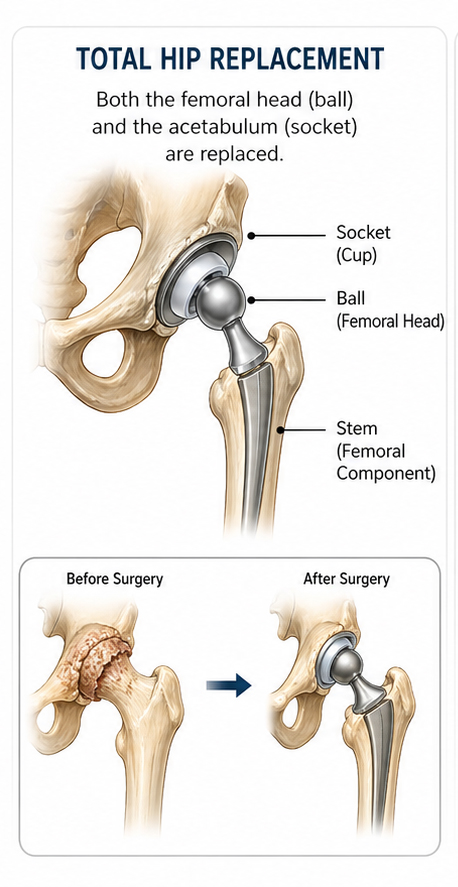
  • Total Hip Replacement
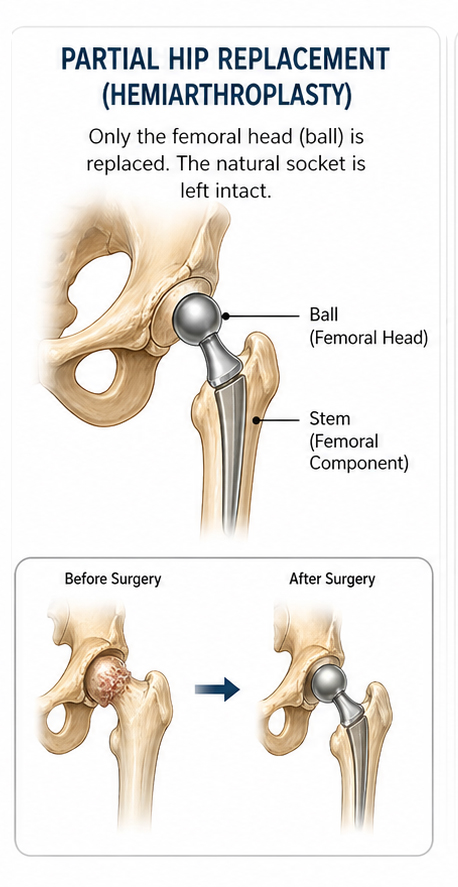
  • Partial Hip Replacement (Hemiarthroplasty)
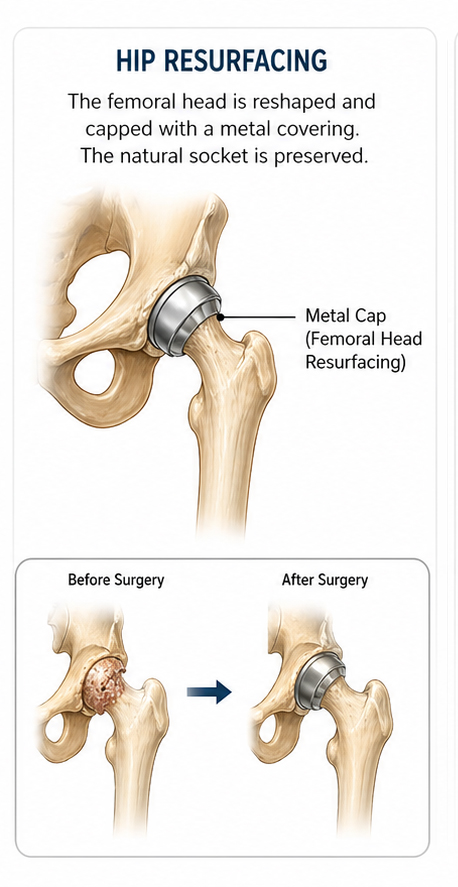
  • Hip Resurfacing
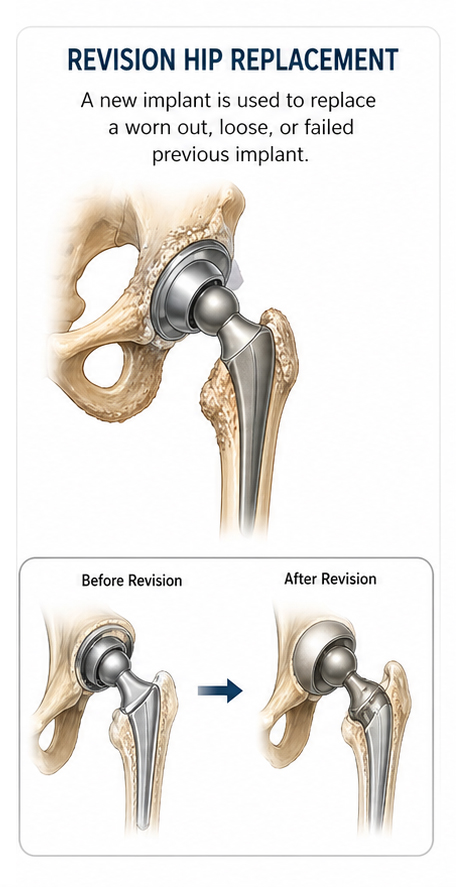
  • Revision Hip Replacement
https://drpraneetorthogoa.com/wp-content/uploads/2026/04/Total-Hip.jpg
https://drpraneetorthogoa.com/wp-content/uploads/2026/04/Partial-Hip-Replacement.jpg
https://drpraneetorthogoa.com/wp-content/uploads/2026/04/Hip-Resurfacing.jpg
https://drpraneetorthogoa.com/wp-content/uploads/2026/04/Revision-Hip.jpg

1. Total Hip Replacement (THR)

Total Hip Replacement is the most common type of hip replacement surgery.

In this procedure:

  • Both the ball (femoral head) and socket (acetabulum) of the hip joint are replaced.
  • The damaged bone and cartilage are removed.
  • Artificial components made of metal, ceramic, or plastic are implanted.

Components of the Implant

  1. Stem – inserted into the femur
  2. Ball – replaces the femoral head
  3. Cup or socket – replaces the hip socket

Benefits

  • Significant pain relief
  • Improved joint movement
  • Better walking ability
  • Long-lasting results (15–25 years)


2. Partial Hip Replacement (Hemiarthroplasty)

Hip Hemiarthroplasty replaces only the ball portion of the hip joint, while the natural socket is left intact.

This procedure is usually recommended for:

  • Hip fractures in elderly patients
  • Trauma or injury affecting the femoral head
  • Certain cases of bone damage

Advantages

  • Shorter surgery time
  • Faster recovery in some patients
  • Less invasive than total hip replacement

Other Types of Hip Replacement Techniques


3. Hip Resurfacing

Hip Resurfacing is a bone-preserving procedure where the femoral head is reshaped and capped with a metal covering, instead of being completely removed.

Best suited for

  • Younger patients
  • Patients with strong bone structure

Benefits

  • Preserves more bone
  • Greater range of motion


4. Revision Hip Replacement

Revision Hip Replacement is performed when a previous hip implant fails due to:

  • Implant wear
  • Infection
  • Loosening of the implant
  • Dislocation of the artificial joint

The old implant is removed and replaced with a new prosthesis.

Conditions That May Require Hip Replacement

Hip replacement is often recommended for severe joint damage caused by:

  • Osteoarthritis
  • Rheumatoid Arthritis
  • Avascular Necrosis
  • Severe hip fractures
  • Hip joint deformities
  • Post-traumatic arthritis
Symptoms Indicating Hip Joint Damage

You may need to consult an orthopedic specialist if you experience:

  • Persistent hip pain
  • Pain while walking or standing
  • Hip stiffness
  • Difficulty climbing stairs
  • Reduced range of motion
  • Pain that interferes with sleep
  • Limping while walking

Early diagnosis can prevent further joint damage and improve treatment outcomes.

Surgical Procedure

Hip replacement surgery typically involves the following steps:

  1. Anesthesia – general or spinal anesthesia is administered
  2. Removal of damaged bone and cartilage
  3. Preparation of the hip socket
  4. Placement of artificial implant components
  5. Closure of the incision
Benefits of Hip Replacement Surgery
  • Significant pain relief
  • Improved walking ability
  • Increased mobility and flexibility
  • Correction of joint deformity
  • Improved quality of life
FAQs About Hip Replacement

How long does a hip replacement last?

Most hip implants last 15–25 years, depending on activity level and implant quality.

Is hip replacement surgery safe?

Yes. Hip replacement is considered one of the most successful orthopedic procedures, with success rates above 90–95%.

Can I walk normally after hip replacement?

Most patients can walk normally after recovery and physiotherapy.

When should I see an orthopedic surgeon?

You should consult an orthopedic specialist if hip pain persists for several weeks, affects daily activities, or does not improve with medication or physiotherapy.