Pediatric trauma refers to injuries affecting the bones, joints, ligaments, muscles, and soft tissues in children due to accidents, falls, sports injuries, or other physical impacts.
Children’s bones are still growing and more flexible than adult bones, which means their injuries can behave differently. Early diagnosis and treatment are essential to ensure proper bone growth and long-term joint function. orthopedic care helps prevent complications such as growth disturbances, deformities, and chronic pain.
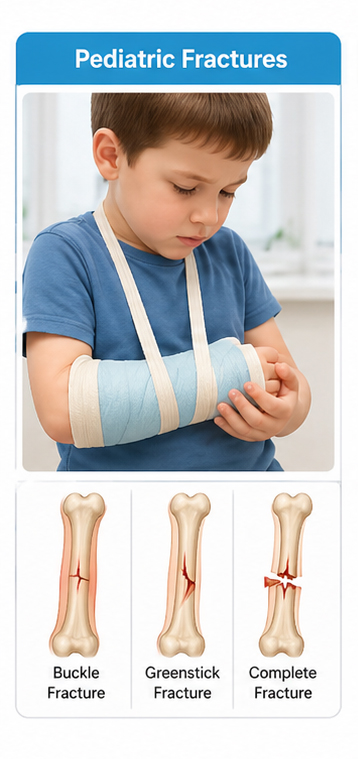
Bone fractures are the most common childhood injuries.
Common fracture types include:
• Greenstick fractures
• Buckle (torus) fractures
• Complete fractures
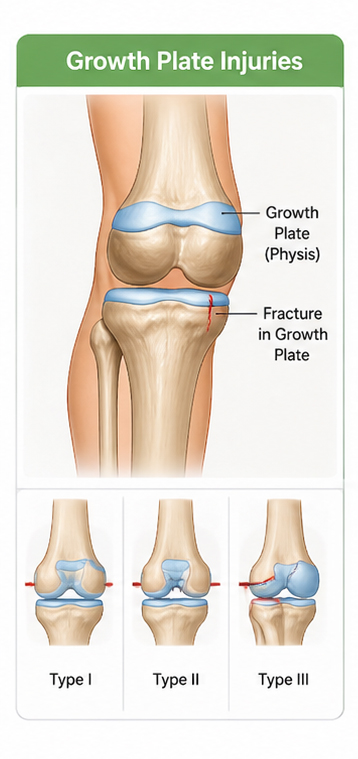
• Growth plate fractures
• Stress fractures
These injuries often occur from falls, sports, playground accidents, or road traffic accidents.
Growth plates are the weakest areas of a child’s skeleton and are vulnerable to injury.
If not treated properly, growth plate injuries can lead to:
• Uneven limb growth
• Bone deformities
• Joint problems later in life
Early orthopedic care is crucial to avoid long-term complications.
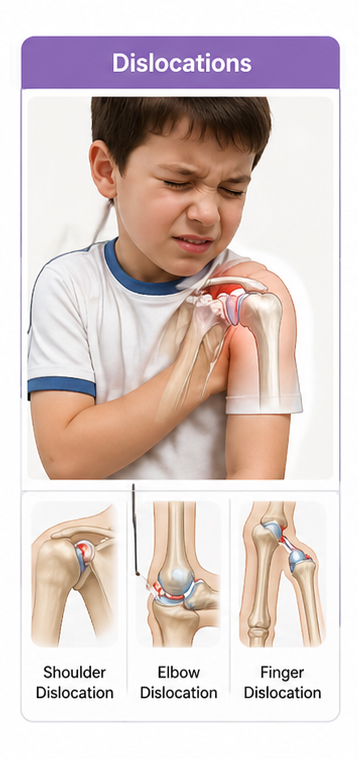
A dislocation occurs when a bone slips out of its normal joint position.
Common pediatric dislocations include:
• Elbow dislocation
• Shoulder dislocation
• Finger dislocation
• Nursemaid’s elbow
These injuries usually occur during sports or sudden pulling of the arm.
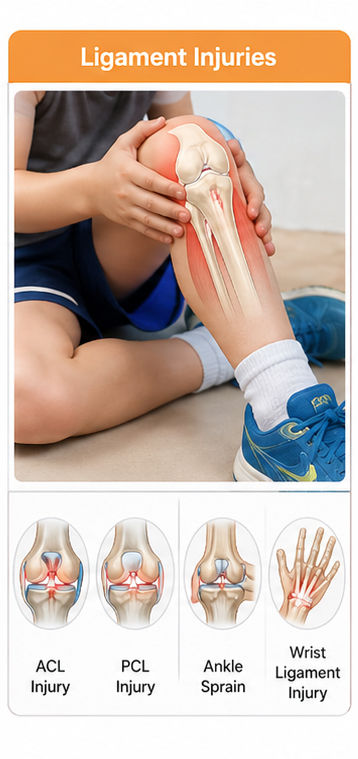
Ligaments connect bones together. Injury to these tissues can cause joint instability and pain.
Common ligament injuries in children include:
• ACL injuries
• PCL injuries
• Ankle ligament injuries
• Wrist ligament injuries
Sports activities like football, basketball, and gymnastics increase the risk.
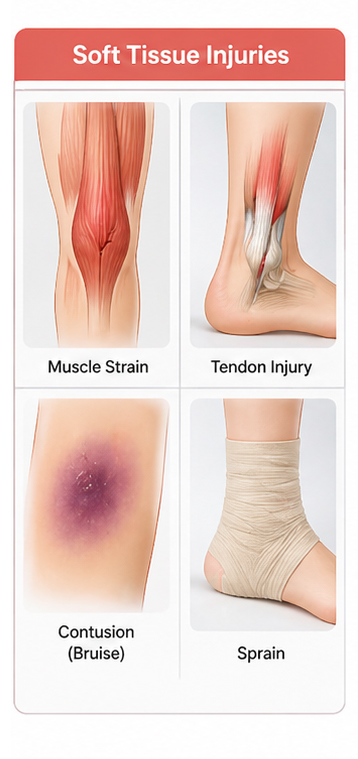
Soft tissue injuries involve muscles, tendons, and ligaments.
Examples include:
• Muscle strains
• Tendon injuries
• Contusions (bruises)
• Sprains
Although these injuries may appear minor, medical evaluation is important to prevent complications.
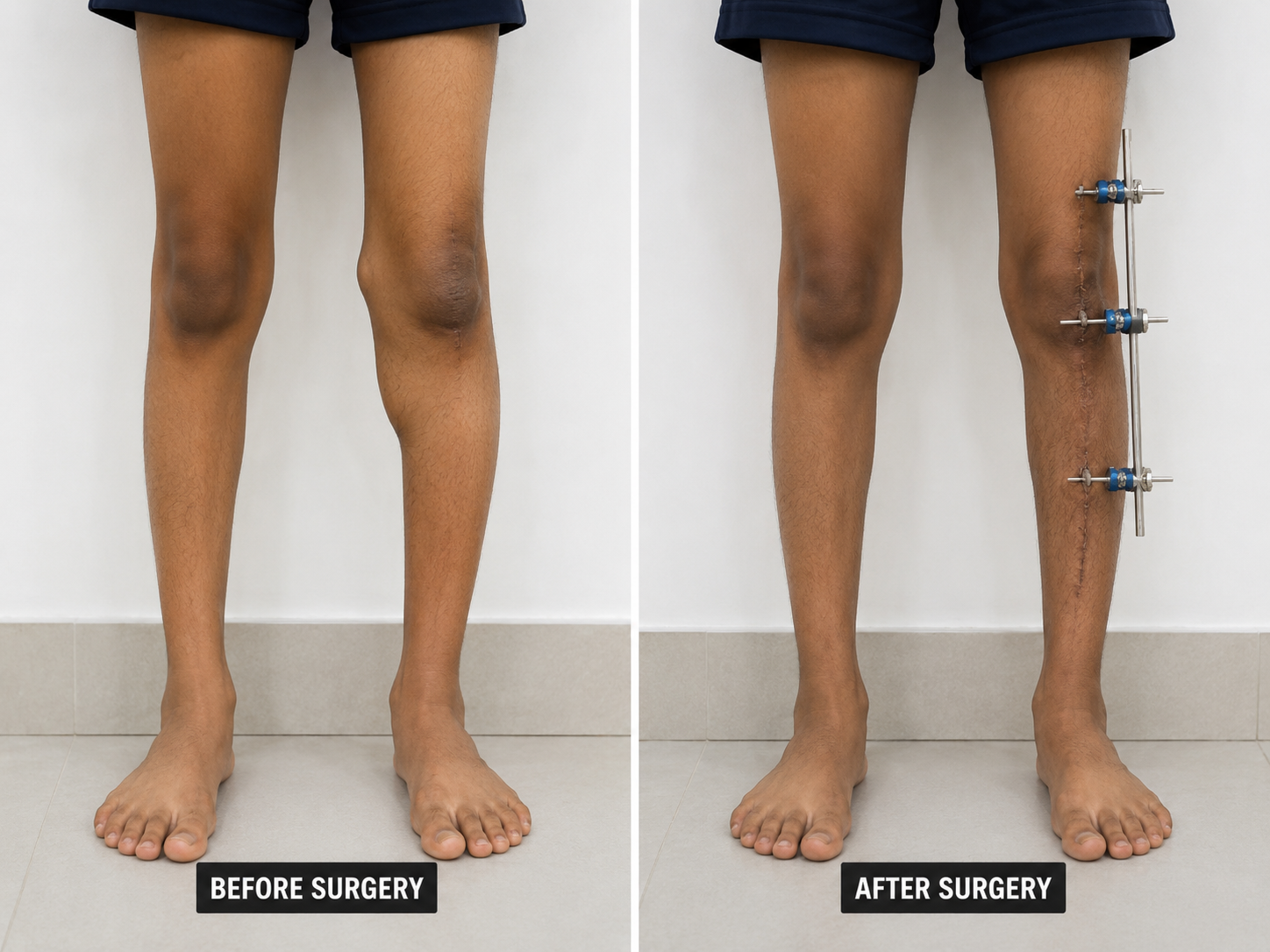
Parents should watch for the following warning signs after an injury:
• Severe pain
• Swelling or bruising
• Inability to move the limb
• Visible deformity
• Difficulty walking or using the limb
• Persistent crying in younger children
• Joint instability
If these symptoms occur, immediate orthopedic evaluation is recommended.
Orthopedic specialists use several methods to diagnose pediatric trauma:
Assessment of swelling, tenderness, and movement.
Common diagnostic tests include:
• X-rays – Detect fractures and dislocations
• CT scans – Detailed bone imaging
• MRI scans – Evaluate ligaments, cartilage, and soft tissue
• Ultrasound – Helpful for soft tissue injuries
Accurate diagnosis helps doctors choose the best treatment plan for the child.
Treatment depends on the type and severity of the injury.
Most pediatric injuries can be treated without surgery.
Common methods include:
• Casting
• Splints or braces
• Pain management
• Rest and immobilization
• Physiotherapy
Children typically heal faster than adults, often within a few weeks.
Surgery may be required for:
• Severe fractures
• Growth plate injuries
• Joint dislocations
• Complex trauma
Modern surgical techniques are minimally invasive, allowing faster recovery and reduced complications.
Modern orthopedic care uses advanced technologies such as:
• Arthroscopy (Keyhole surgery)
• 3D imaging for precise diagnosis
• Minimally invasive fracture fixation
• Pediatric-specific implants
• Computer-guided orthopedic surgery
These technologies improve accuracy, recovery time, and treatment outcomes.
Seek medical attention if your child experiences:
• Severe pain after a fall or injury
• Difficulty walking or moving the limb
• Visible bone deformity
• Persistent swelling or bruising
• Joint instability
• Limited range of motion
Early orthopedic consultation ensures proper bone healing and normal growth development.