


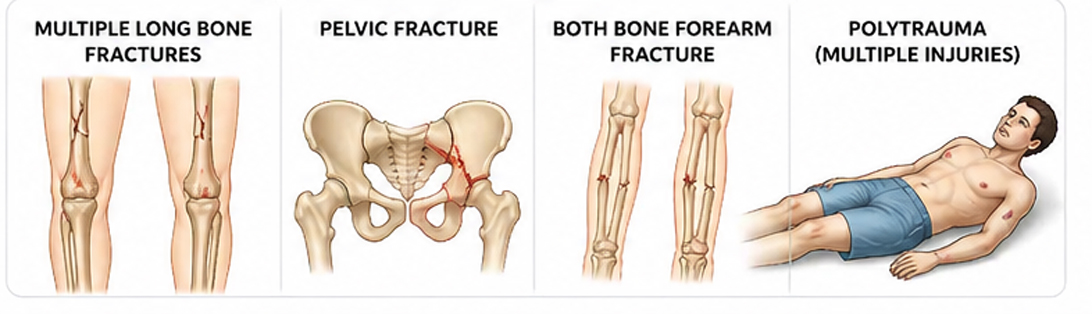
A fracture is a medical condition in which a bone breaks, cracks, or splits due to excessive force, trauma, or stress. Fractures commonly occur due to accidents, falls, sports injuries, or high-impact trauma.
Fractures can vary from a small hairline crack to a complete break where the bone separates into multiple pieces.
A dislocation occurs when the bones forming a joint are forced out of their normal position, causing the joint to lose its normal alignment.
Dislocations often result from falls, sports injuries, accidents, or sudden twisting movements.
Ligament injuries occur when ligaments (strong connective tissues that connect bones to other bones) are stretched, partially torn, or completely torn.
These injuries usually happen due to sudden twisting movements, sports injuries, or high-impact trauma.
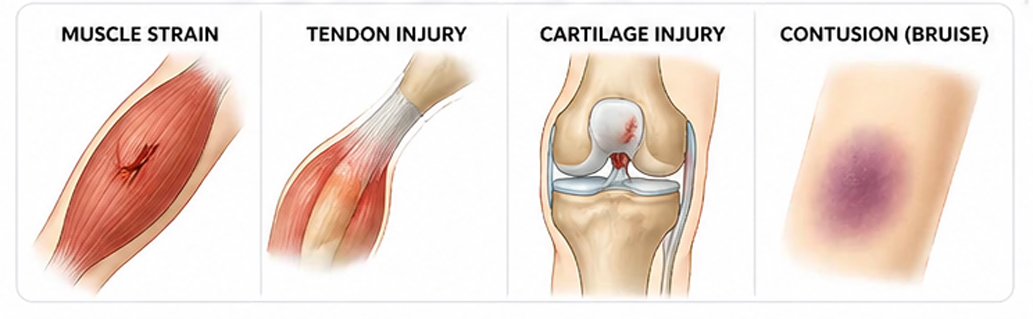
Soft tissue injuries involve damage to muscles, tendons, ligaments, or other supportive tissues surrounding bones and joints.
These injuries can occur from overuse, sudden movement, trauma, or direct impact.
Complex trauma refers to severe injuries involving multiple bones, joints, or body systems caused by high-impact accidents or major trauma events.
Common symptoms include:
Immediate medical evaluation is recommended when these symptoms occur.
You should consult an orthopaedic specialist if you experience:
Early specialist evaluation can significantly reduce long-term complications.
Orthopaedic trauma diagnosis involves a combination of clinical evaluation and imaging tests.
Doctors examine:
Modern hospitals use advanced imaging technology such as:
These technologies help identify hidden fractures, ligament tears, and joint damage accurately.
Treatment depends on:
Treatment goals include:
Many injuries can be treated without surgery.
Common non-surgical methods include:
Minor fractures and ligament injuries often heal successfully with conservative treatment.
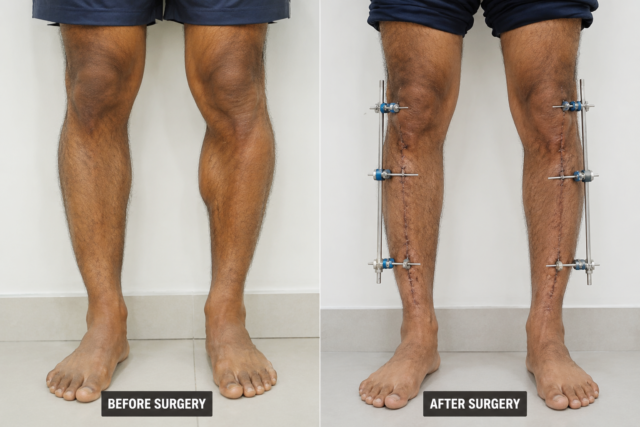
Surgery is required when:
Common orthopaedic trauma surgeries include:
Modern orthopaedic surgery uses minimally invasive techniques to improve recovery.
Examples include:
These techniques provide:
Early treatment of trauma offers major benefits:
Delaying treatment may lead to chronic pain, joint stiffness, and improper bone healing.
An experienced orthopaedic trauma specialist provides:
Specialized care ensures faster recovery and better long-term outcomes for patients with complex orthopaedic injuries.